1. Introduction
In modern power electronics, increasing efficiency and maintaining a stable constant power output are crucial challenges faced by engineers and designers. As the limitations of silicon-based technology become more apparent, Silicon Carbide (SiC) MOSFETs have rapidly emerged as the preferred choice for high-performance power electronic systems due to their exceptional properties.
By Jonathon C. Woo
This article explores the impact of SiC MOSFET technology on achieving high efficiency and stable constant power output. We provide an overview of the SiC MOS process, discuss its key performance advantages, compare it with traditional silicon technology, and examine the technical challenges involved in constant power delivery. Finally, practical applications and future trends in SiC technology are discussed.
2. Overview of the SiC MOS Process
2.1. Basic Characteristics of Silicon Carbide
Silicon Carbide (SiC) is a wide bandgap semiconductor material that offers significant advantages over traditional silicon (Si). Key characteristics include:
- Wide Bandgap: SiC has a bandgap of approximately 3.26 eV—about three times that of silicon (1.12 eV). This wide bandgap allows devices to maintain stable performance at higher temperatures and reduces leakage current under harsh conditions.
- High Thermal Conductivity: SiC’s thermal conductivity is roughly three times that of silicon, which enables SiC MOSFETs to manage heat more effectively, reducing cooling requirements and overall system costs.
- Superior Electric Field Strength: With a breakdown electric field about ten times higher than silicon, SiC devices can operate at higher voltages within the same volume, making them ideal for high-voltage applications.
2.2. Comparison with Traditional Silicon (Si) Technology
To understand the advantages of SiC, it is useful to compare it with conventional silicon technology:
- Switching Losses: Silicon MOSFETs tend to incur significant switching losses at high frequencies, which limits efficiency. In contrast, SiC MOSFETs exhibit lower switching losses due to their reduced parasitic capacitance and faster switching speeds.
- Thermal Performance: SiC’s superior thermal conductivity enables devices to operate efficiently in high-temperature environments, whereas silicon devices are more prone to performance degradation and leakage at elevated temperatures.
- Voltage Capability: The higher breakdown field strength of SiC allows for higher voltage operation within smaller device sizes compared to silicon devices.
2.3. Why Choose SiC Technology?
The primary reasons for choosing SiC technology in power electronics include:
- Higher Efficiency: Lower on-resistance in SiC MOSFETs results in significantly reduced conduction losses, thereby increasing overall system efficiency.
- Higher Power Density: Thanks to its superior voltage handling and thermal properties, SiC allows for more compact device designs that deliver higher power output.
- Improved Thermal Stability: SiC devices maintain stable performance at high temperatures, reducing reliance on extensive cooling systems.
- High-Frequency Operation: The fast switching speed of SiC MOSFETs minimizes switching losses and allows for more efficient high-frequency converters and inverters.
- Cost-Effectiveness: Although initial costs may be higher, the long-term benefits in efficiency, power density, and reduced cooling requirements make SiC devices increasingly cost-effective as manufacturing processes mature.
3. Achieving High Efficiency
3.1. Advantages of SiC MOSFETs in High-Frequency Operation
High-frequency operation is essential for many modern power electronic systems such as inverters and converters. SiC MOSFETs offer notable advantages in this regard:
- Faster Switching Speed: Due to high carrier mobility, SiC MOSFETs switch much faster than traditional silicon MOSFETs. This rapid switching minimizes transition losses.
- Reduced Switching Losses: The combination of lower parasitic capacitance and higher breakdown strength in SiC devices results in significantly lower energy losses during switching.
- Enhanced Voltage Handling: In high-voltage applications, SiC MOSFETs maintain low conduction losses even under high switching frequencies, making them ideal for electric vehicle inverters and renewable energy systems.
3.2. How SiC Improves System Efficiency and Reduces Losses
SiC technology improves overall system efficiency and minimizes losses through several mechanisms:
- Lower On-Resistance: The inherently low on-resistance of SiC MOSFETs leads to reduced conduction losses under load, which is especially beneficial in high-power applications.
- Reduced System Size: Faster switching enables the use of smaller inductors and capacitors, which decreases the overall size and weight of the power electronic system.
- Improved Thermal Management: The high thermal conductivity of SiC facilitates effective heat dissipation, reducing the need for extensive cooling and lowering energy consumption for thermal management.
4. Stability of Constant Power Output
Stable constant power output is critical for ensuring the reliable operation of power electronic systems. This requires the system to maintain a consistent output despite variations in load. Achieving this stability involves several technical challenges.
4.1. Technical Demands and Challenges
To maintain a constant power output, the system must meet several technical requirements:
- High Dynamic Response: The system must adjust its output rapidly to accommodate sudden changes in load, requiring fast switching speeds and low latency.
- Low Losses: Minimizing both switching and conduction losses is essential to sustain stable power delivery over time. Traditional silicon devices, with their higher losses, often struggle under these conditions.
- High Voltage and Temperature Tolerance: The ability to operate reliably in high-voltage and high-temperature environments is necessary for applications such as electric vehicles and industrial systems.
4.2. Contributions of SiC MOSFETs to Stable Power Output
SiC MOSFETs contribute to stable constant power output in several ways:
- Faster Switching and Response: The extremely fast switching capabilities of SiC MOSFETs allow the system to quickly adjust to load changes, maintaining a constant power output even during dynamic conditions.
- Low Loss Characteristics: With significantly lower on-resistance and parasitic capacitance, SiC devices reduce energy losses and minimize heat generation, thereby supporting a stable power delivery.
- Robust Performance in Harsh Environments: Thanks to the wide bandgap and superior thermal properties of SiC, devices continue to operate reliably under high-voltage and high-temperature conditions, ensuring consistent performance in demanding applications.
5. Practical Applications of SiC Technology
SiC technology has been widely adopted in various high-performance applications due to its efficiency and stability advantages. Key applications include:
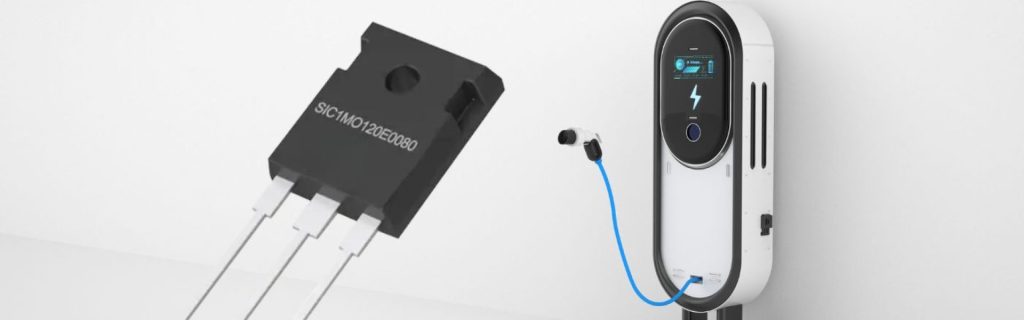
5.1. Electric Vehicle and Charging Systems
With the rapid growth of the electric vehicle market, there is an increasing demand for efficient power electronics:
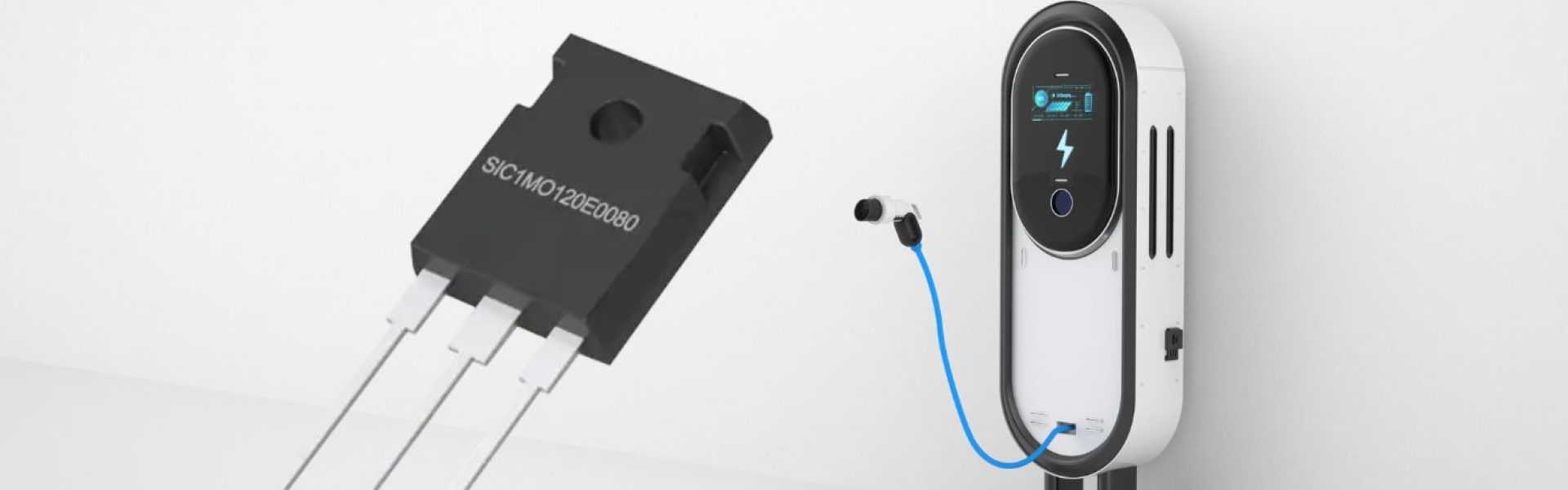
- Enhanced Charging Efficiency: In DC fast chargers, SiC devices reduce energy losses, thus shortening charging times and increasing overall energy utilization efficiency.
- Improved Inverter Efficiency: In electric vehicle drive systems, SiC MOSFETs enable more efficient conversion of DC from the battery to AC for the motor, reducing thermal losses and extending vehicle range.
5.2. Solar Inverters and Renewable Energy Systems
In renewable energy applications, maximizing conversion efficiency is key:
- Higher Energy Conversion Efficiency: The fast switching and low loss characteristics of SiC MOSFETs allow solar inverters to operate at high frequencies, reducing losses and maximizing the conversion of DC from solar panels into usable AC power.
- Reduced Component Size: Faster switching enables the use of smaller passive components, which decreases overall system size and cost.
5.3. Industrial Motor Drives and Power Supply Systems
In industrial settings, where large power and stable output are critical:
- Efficient Motor Drives: SiC MOSFETs enable high-frequency operation in motor drives, resulting in quicker response times and improved efficiency, which is vital for precise control in industrial applications.
- Stable Power Supplies: In power supply systems for data centers and manufacturing plants, the high voltage and high-temperature tolerance of SiC devices ensure reliable and stable power output, reducing downtime and operational costs.
6. Future Outlook for SiC Technology
6.1. Trends and Prospects
As the demand for more efficient, compact, and reliable power electronic devices continues to grow, the future of SiC technology looks promising:
- Increased Manufacturing Maturity: Ongoing improvements in production processes are expected to enhance yield and reduce costs, making SiC devices more competitive with traditional silicon components.
- Integrated Design: Engineers are developing integrated SiC modules that consolidate multiple devices into a single package, thereby boosting power density and simplifying system design.
- Expanded Application Areas: SiC technology is anticipated to find broader applications in high-power systems such as electric vehicle propulsion, renewable energy inverters, and industrial power supplies.
6.2. Comparison with Other Wide-Bandgap Semiconductors
In the wide-bandgap semiconductor arena, Gallium Nitride (GaN) is also emerging as a popular option. While both SiC and GaN offer significant improvements over silicon, they differ in several aspects:
- Operating Voltage Range: SiC MOSFETs are typically suited for medium-to-high voltage applications (above 600V), while GaN devices are more appropriate for low-to-mid voltage applications (below 600V).
- Switching Speed: GaN devices generally offer even faster switching speeds and lower parasitic capacitance than SiC, making them ideal for ultra-high-frequency applications.
- Thermal Performance: SiC’s superior thermal conductivity makes it more effective in high-temperature environments, whereas GaN’s thermal performance is relatively limited, restricting its use in very high-power applications.
Although GaN may offer advantages in some high-frequency, low-voltage scenarios, SiC’s excellent high-voltage and high-temperature performance ensures its competitiveness in heavy-duty and high-power applications.
6.3. Potential Improvements and Challenges
Despite its many advantages, SiC technology still faces challenges that need addressing:
- Manufacturing Costs: While costs are gradually decreasing, the manufacturing process for SiC remains more complex than that for silicon, necessitating further improvements to drive down costs.
- Material Defects: Imperfections such as dislocations and micropipes in SiC crystals can affect device performance and reliability; ongoing research is needed to reduce these defects.
- Packaging Technology: As the use of SiC devices increases in high-frequency and high-power applications, advances in packaging and thermal management are critical to fully exploit the technology’s potential.
7. Conclusion
The advent and rapid development of SiC MOSFETs have provided a reliable solution for achieving high efficiency and stable constant power output in modern power electronics. With their high voltage capability, low conduction losses, rapid switching speeds, and superior thermal management, SiC devices not only enhance system efficiency but also ensure stable performance under harsh conditions. Although challenges remain regarding manufacturing costs, material defects, and packaging, ongoing technological advancements are expected to further expand the applications of SiC, particularly in high-power systems where efficiency and reliability are paramount.
SiC technology is already proving its value in electric vehicle systems, renewable energy inverters, and industrial power supplies—and its future appears even more promising as production techniques improve and integrated designs emerge.
8. References
Note: Since no external URLs were provided in the original text, the references below are generated based on typical sources in the field. Please verify and update with actual sources if available.
- Chow, T. (Year). Silicon Carbide Power Devices: Fundamentals and Applications. Publisher.
- Kim, S., & Lee, J. (Year). High-Efficiency Power Converters Using SiC MOSFETs. Journal of Power Electronics, Volume(Issue), pages.
- Mishra, U. K., Parikh, P., & Wu, Y. (Year). AlGaN/GaN HEMTs—An Overview of Device Operation and Applications. Proceedings of the IEEE, Volume(Issue), pages.
- Technical White Paper. (Year). Advantages of SiC Technology in Power Electronics. [Company Name]