Introduction to Crest Factor
Crest factor is a dimensionless ratio used by engineers and analysts to characterize waveforms by comparing peak values (either positive or negative) to their RMS (Root Mean Square) values. It indicates how extreme the peaks are within a waveform. The crest factor provides insights into waveform dynamics and is particularly useful in signal processing, electrical engineering, and audio engineering. High crest factors imply substantial peaks compared to the average or RMS levels, which can significantly impact equipment performance and signal integrity.
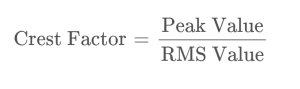
The formula for calculating crest factor is:
Where:
- **Peak Value** represents the maximum absolute value of the waveform, whether positive or negative.
- **RMS Value** is the effective value of the waveform, which accounts for the varying amplitude over time and provides a measure of the power delivered by the waveform.
The crest factor is an important parameter in various applications, including audio dynamics, where it helps in assessing the headroom of audio signals and the potential for distortion. In electrical engineering, it is crucial for evaluating power systems, as high crest factors can indicate transient conditions that may lead to equipment failures or inefficiencies.
For instance, in audio systems, a high crest factor may suggest that the signal contains sharp peaks that could cause clipping when amplified, leading to unwanted distortion. Conversely, a low crest factor might indicate a more stable and consistent signal, which is typically easier to process without introducing artifacts.
Why Is Crest Factor Important?
In telecommunications, understanding the crest factor can aid in optimizing modulation schemes and improving the design of amplifiers to ensure they can handle the extremes of the signal without degradation. Similarly, in industrial applications, monitoring the crest factor can help in diagnosing the health of machinery and ensuring that systems operate within safe limits.
Signal Integrity
Crest factor helps identify signal anomalies such as distortion and clipping. By pinpointing peaks and troughs in a waveform, engineers can better detect deviations from ideal signals, ensuring accurate and high-quality transmission and processing.
Equipment Design
Crest factor influences the design of equipment such as oscilloscopes, amplifiers, and power supplies. A clear understanding of waveform dynamics helps engineers design robust and reliable equipment that accurately handles signals with varying crest factors.
Efficiency Measurement
In electrical systems with high crest factors, significant differences arise between peak and average power levels. Engineers optimize equipment design around these insights to enhance power efficiency, reduce energy waste, and improve overall system performance.
Defining Key Components of Crest Factor
Peak Value
The peak value is the maximum absolute amplitude of a waveform, critical in determining potential distortion and the necessary handling capabilities of electrical components.
RMS Value (Root Mean Square)
The RMS value represents the effective or average value of a waveform, calculated by taking the square root of the mean of the squared values. It reflects the overall power delivered by the waveform, making it a fundamental parameter for power calculations and thermal considerations in engineering.
Detailed Table of Crest Factors for Common Waveforms
| Waveform Type | RMS Value (Effective Value) | Crest Factor | Peak-to-Average Power Ratio (PAPR) in dB |
|---|---|---|---|
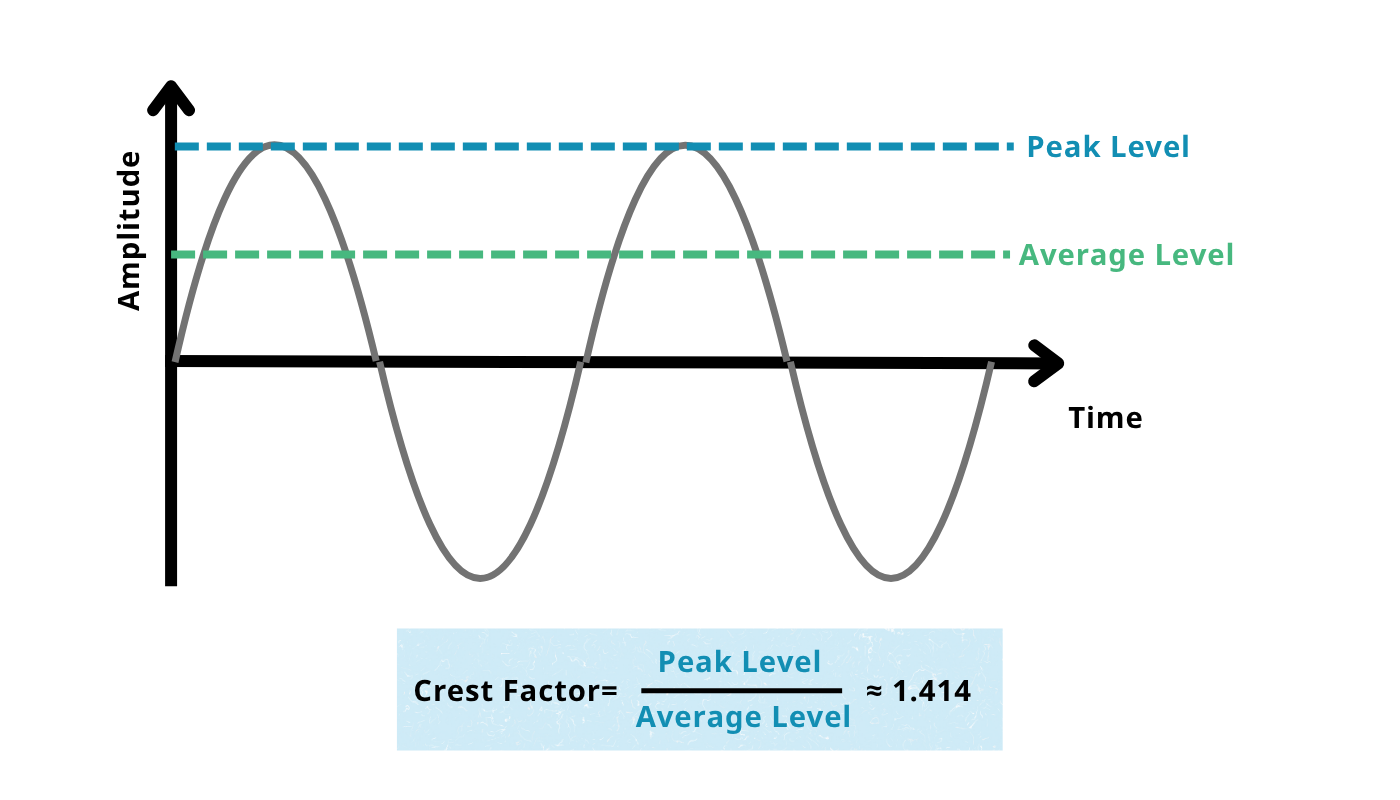
| Sine Wave | 0.707 | 1.414 | 3.01 dB |
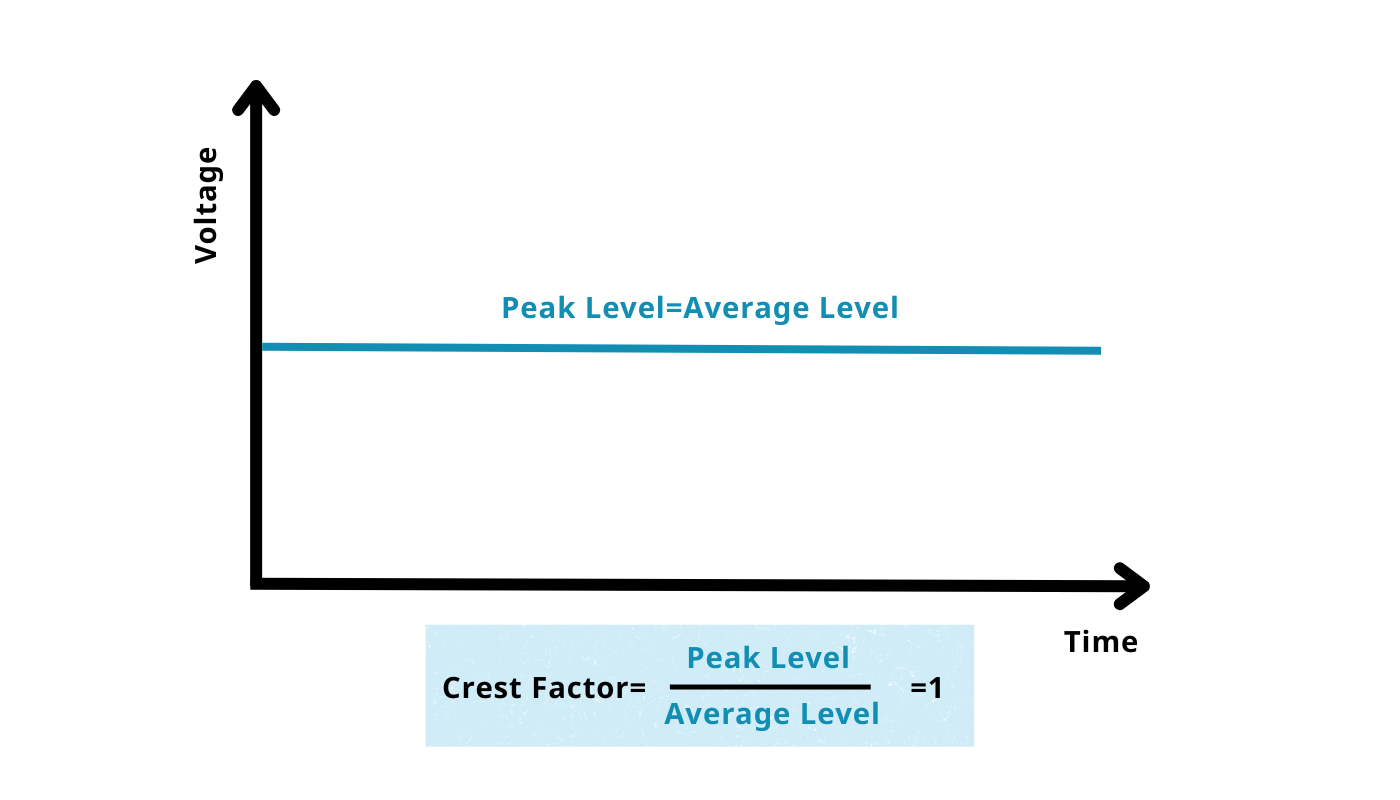
| Square Wave | 1 | 1 | 0 dB |
| Triangle Wave | 0.577 | 1.732 | 4.77 dB |
| Full-wave Rectified Sine | 0.707 | 1.414 | 3.01 dB |
| Half-wave Rectified Sine | 0.5 | 2 | 6.02 dB |
| Gaussian Noise | σ (standard deviation) | Infinite | Infinite dB |
Tools for Measuring Crest Factor
Oscilloscopes
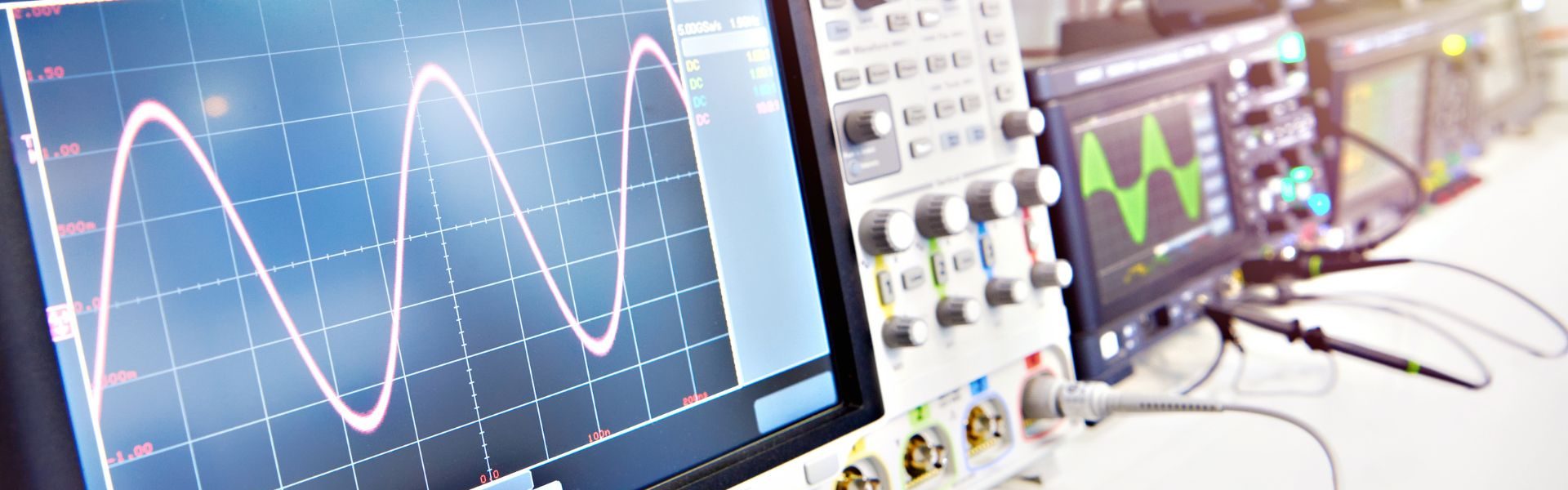
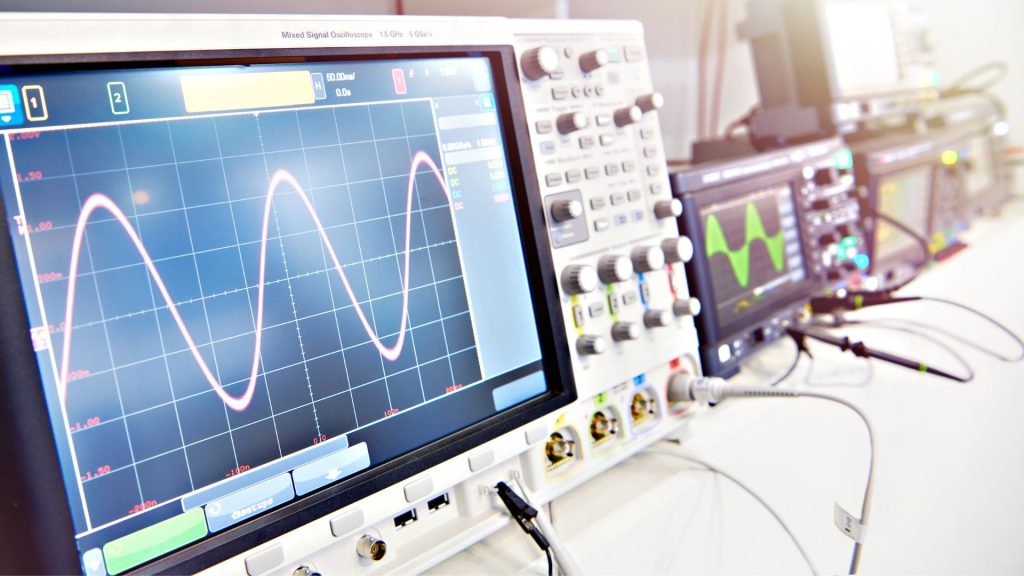
Oscilloscopes visually display waveforms, making peak and RMS measurements straightforward. They are indispensable in real-time analysis for diagnosing waveform irregularities.
Software Tools
Digital software tools paired with multimeters and other data acquisition hardware enable precise crest factor calculations through detailed waveform analysis.
Specialized Equipment
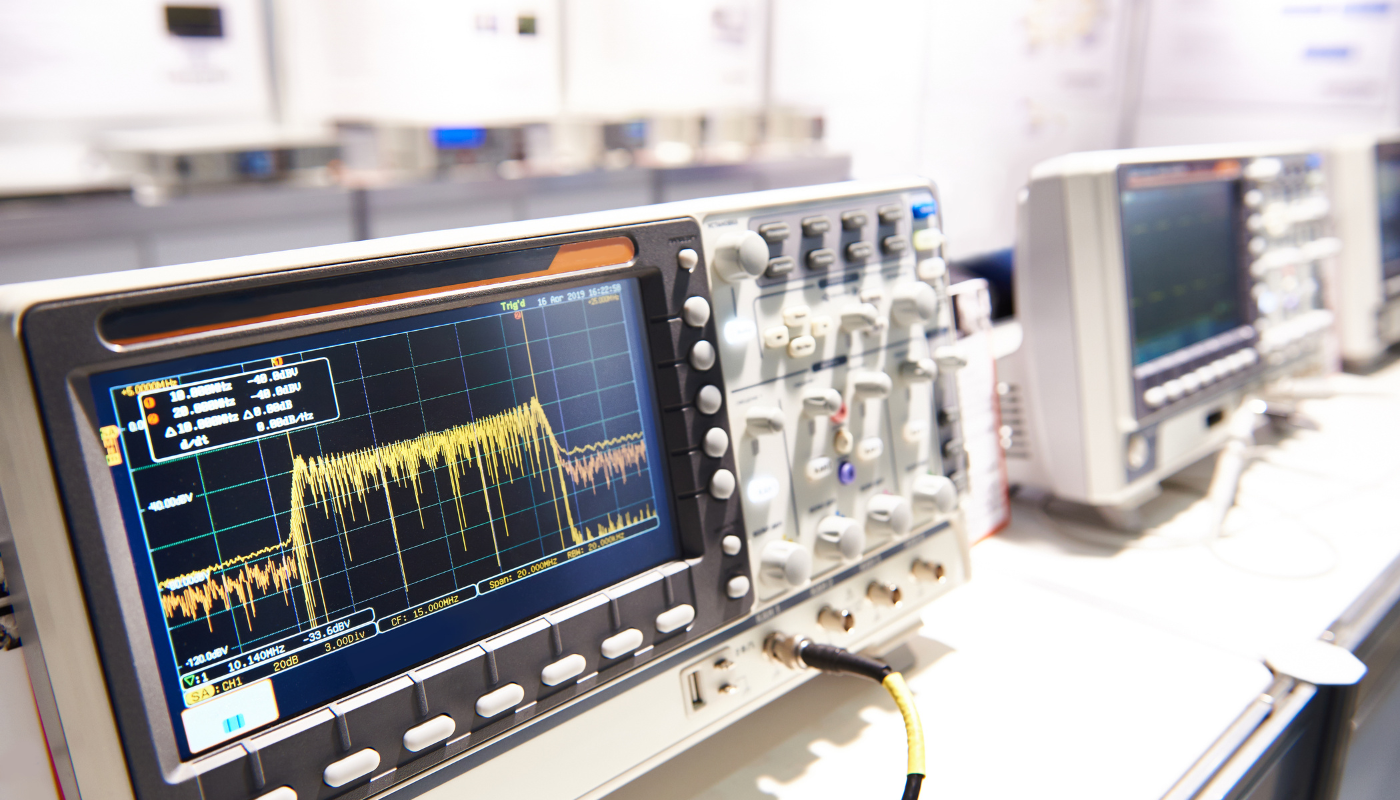
- Spectrum Analyzers: Essential for analyzing complex waveforms in the frequency domain, offering precise insights into high crest factors.
- Power Quality Analyzers: Used predominantly in industrial environments to provide comprehensive details about power quality, including crest factors.
- Vector Signal Analyzers: Utilized in advanced digital signal processing to measure crest factor alongside other parameters like amplitude, phase, and magnitude.
- Waveform Analyzers: High-precision tools specifically designed for in-depth time-domain waveform analysis, highly effective for research and development.
Practical Applications of Crest Factor
Testing and Diagnostics
- Detecting Distortions: Crest factor analysis helps identify harmonic distortions and clipping, signaling potential issues in waveform pathways.
- Monitoring Efficiency: Crest factor evaluations assist engineers in optimizing power systems by aligning peak values with average power usage.
- Predicting Signal Behavior: Insights from crest factor analysis aid in predicting transient responses and system stability, facilitating preventive maintenance and effective troubleshooting.
Equipment Design
- Amplifiers: Engineers use crest factor considerations to design amplifiers capable of handling large peak signals without distortion, ensuring consistent performance.
- Filters: Understanding the interactions between signal peaks and filter behavior helps improve the effectiveness of signal filtration.
- Oscilloscopes: Crest factor considerations enhance oscilloscope designs by optimizing input stages, triggering mechanisms, and display scaling for accurate waveform representation.
Challenges and Limitations in Crest Factor Analysis
Measurement Errors
- Noise Sensitivity: High sensitivity to noise can distort peak measurements, causing inaccuracies.
- Resolution Constraints: Equipment limitations in sampling rate and quantization may affect measurement accuracy, especially for rapidly changing signals.
Situational Limitations
- Non-periodic Signals: Crest factor may inadequately characterize highly erratic or non-periodic signals, requiring alternative analytical approaches.
- Dependence on Signal Characteristics: Signals with unique peak distributions or phase shifts may provide misleading crest factor measurements.
Misinterpretation Risks
Interpreting crest factor without contextual understanding can lead to incorrect conclusions about waveform integrity, particularly with modulated or complex signals.
Equipment and Methodology Limitations
Accurate crest factor measurements often require specialized, costly equipment and expert handling, potentially limiting accessibility and practicality for certain applications.
Conclusion
The crest factor is an essential parameter in electrical and signal engineering, profoundly influencing signal analysis, equipment design, and efficiency optimization. It bridges theoretical concepts and practical applications, enabling engineers to make informed, precise, and effective decisions.
Ensuring reliable crest factor measurements demands high-quality tools such as oscilloscopes, spectrum analyzers, and waveform analyzers. These instruments facilitate precise waveform analysis, maintaining signal integrity and enhancing system reliability.
References
- Wolf, R., Ellinger, F., Eickhoff, R., Laddomada, M., & Hoffmann, O. (2011, July 14). Mobile lightweight wireless systems: Second international ICST conference, Mobilight 2010, May 10–12, 2010, Barcelona, Spain, revised selected papers (P. Chatzimisios, Ed., p. 164). Springer. https://doi.org/10.1007/978-3-642-16643-3
- Texas Instruments. (n.d.). Op amp noise theory and applications [Application Report]. (Archived November 30, 2014). Retrieved from https://web.archive.org/web/20141130085331/http://www.ti.com/lit/an/slva043b/slva043b.pdf
- Gray, R., & Stockham, T. (n.d.). Chapter 1: First-order low-pass filtered noise. In Noise in Digital Processing. Retrieved from relevant publisher site or textbook (link not specified).
- Analog Devices. (n.d.). Noise: Frequently asked questions. Retrieved from https://www.analog.com/media/en/training-seminars/tutorials/MT-047.pdf
- Feher, K. (1987). Telecommunications measurements, analysis, and instrumentation (Section 7.2.3: Finite crest factor noise). Prentice-Hall.
- Tuttlebee, W. H. W. (n.d.). Crest factor reduction of an OFDM/WiMAX network. [Conference paper or technical report]. (Full bibliographic details needed for full citation; presumed whitepaper or IEEE article).