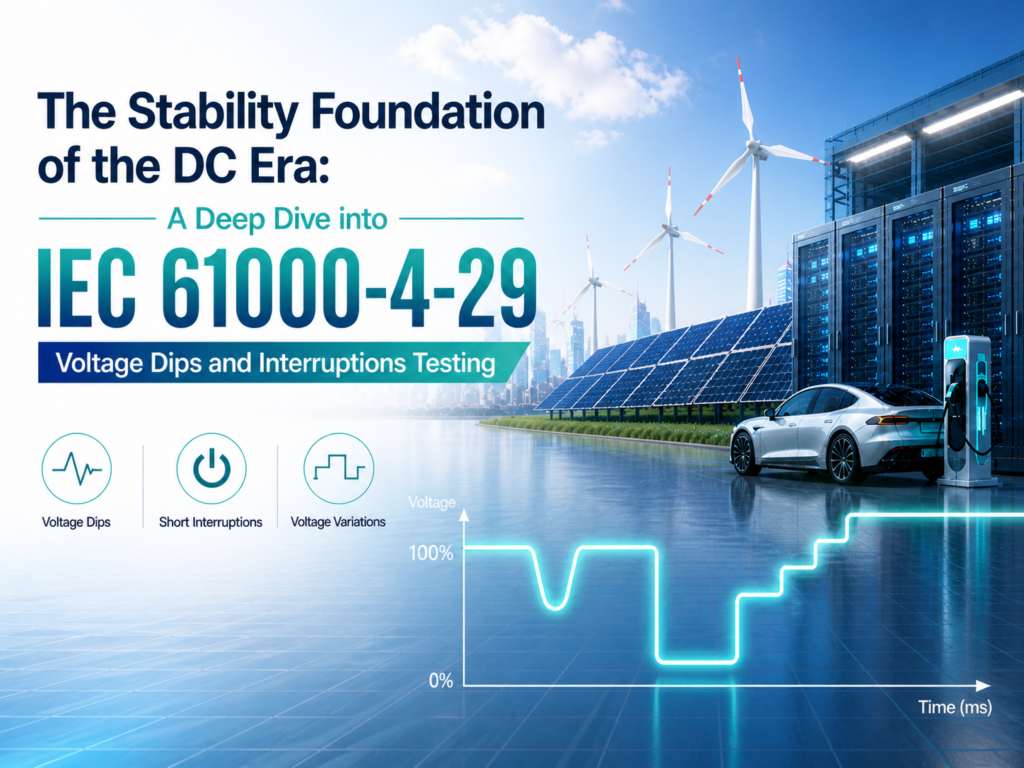
With the global energy transition accelerating, DC power applications are becoming increasingly widespread—from 800V high-voltage architectures in electric vehicles (EVs) to 380V high-voltage direct current (HVDC) systems adopted by data centers to improve efficiency.
However, DC power systems are not inherently stable. When heavy loads start up, battery systems switch between charging and discharging, or grid faults occur, voltage instability can frequently appear at the input terminals of equipment.
This is precisely why IEC 61000-4-29 has become a critical standard that power electronics engineers cannot afford to overlook.
In this article, we will explore the underlying physical phenomena, analyze regulatory requirements, and discuss how advanced testing equipment can help build a robust “immunity system” for your products.
- Physical Phenomena: The “Invisible Threats” in DC Power Systems
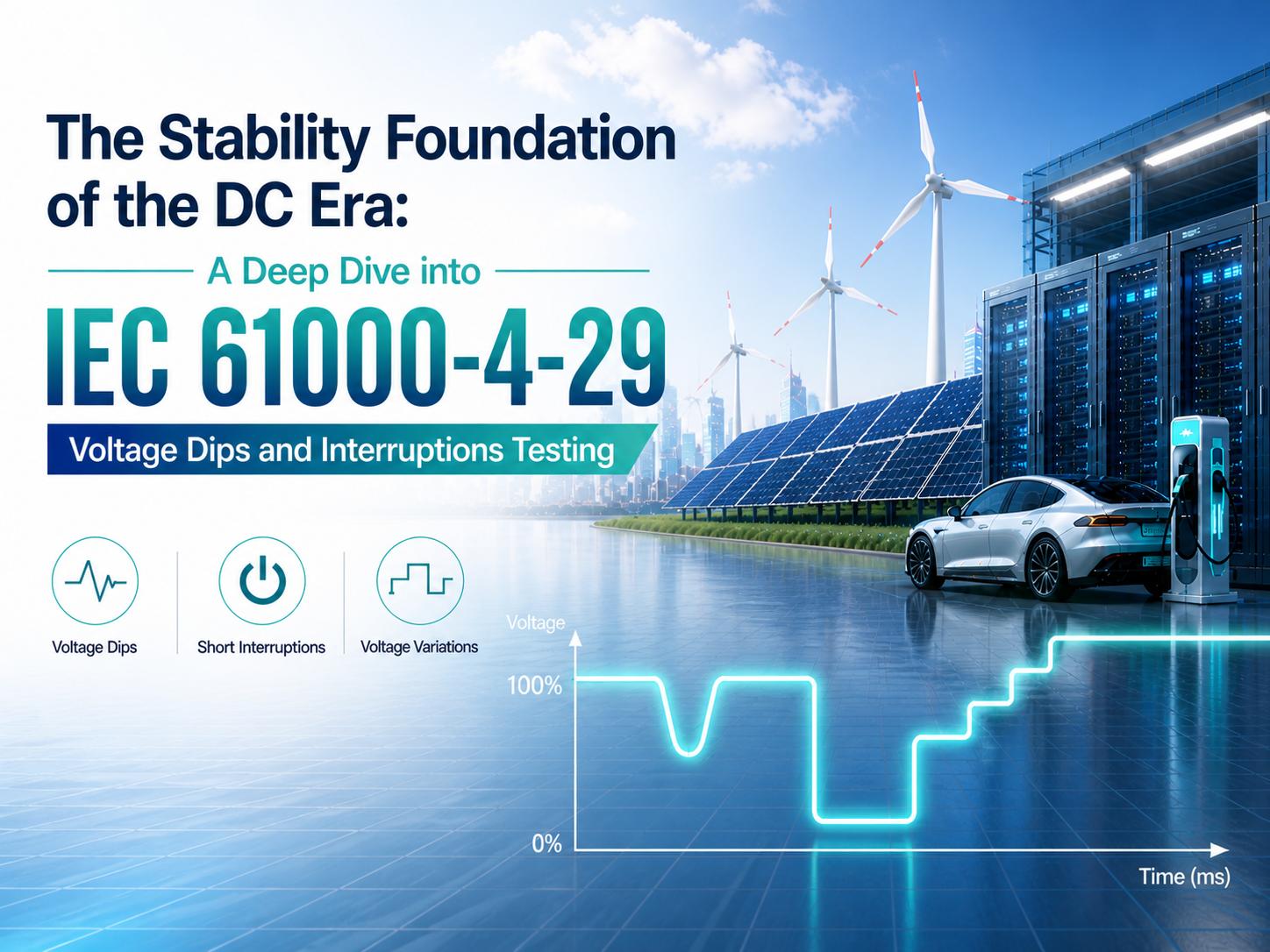
IEC 61000-4-29 defines three key low-frequency phenomena at the DC power input port:
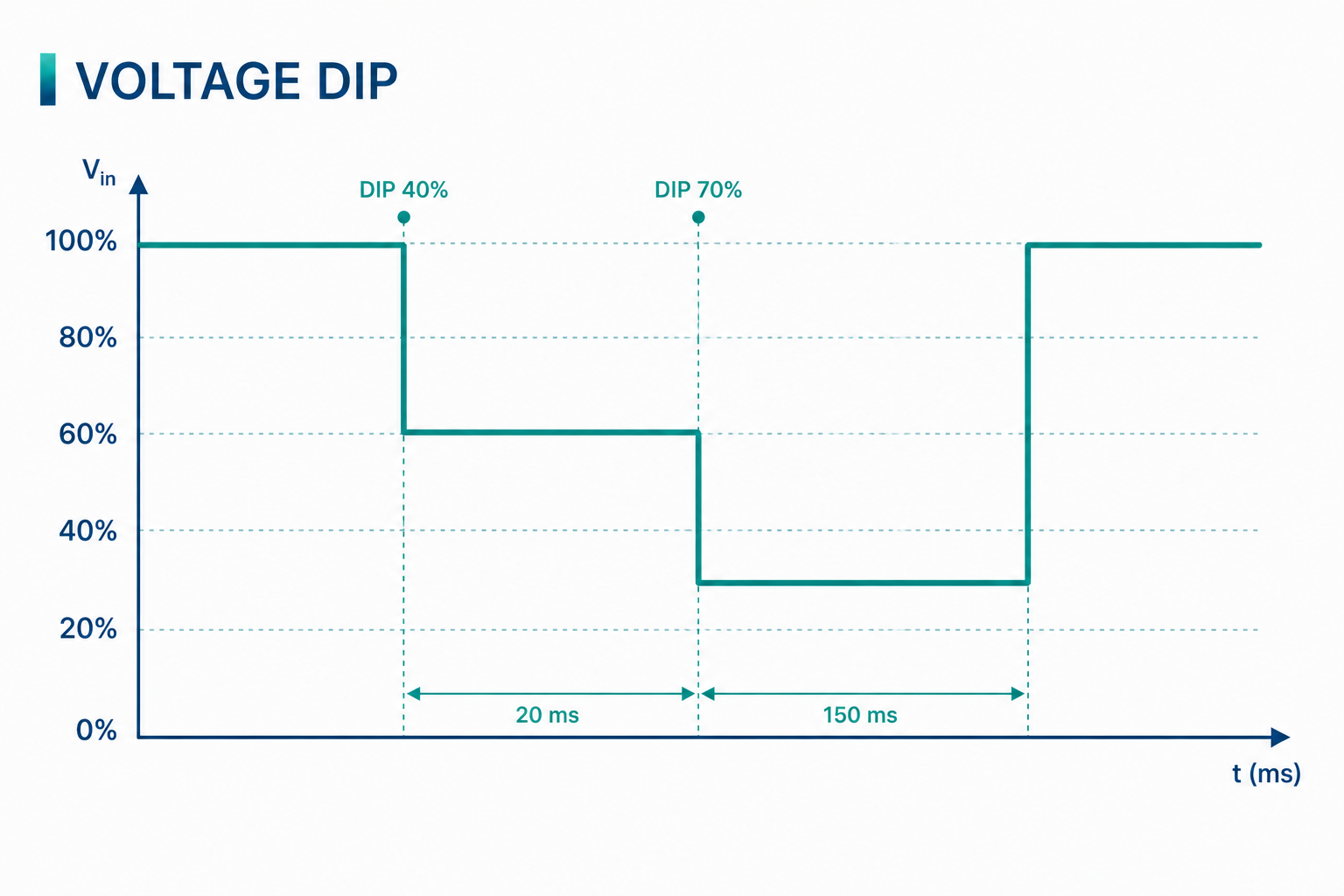
- Voltage Dips
A sudden reduction in voltage followed by recovery within milliseconds to seconds.
In real-world scenarios, this often occurs during rapid acceleration in EVs due to battery internal resistance, or when high-power equipment connected to the same DC bus causes transient fluctuations. - Short Interruptions
A complete loss of voltage or a drop exceeding 80% of the rated voltage.
This typically happens during power source switching (e.g., generator to battery) or when mechanical relays and contactors operate. - Voltage Variations
A gradual increase or decrease in voltage relative to the nominal level.
This is commonly used to simulate battery charge/discharge behavior, typically ranging from 85% to 120%.
- Test Levels: Can Your Equipment Withstand It?
According to the standard, test levels are defined based on the equipment’s rated voltage.
Engineers must verify that the equipment under test (EUT) can withstand the following extreme conditions:
| Test Item | Test Level (% UT) | Typical Duration (s) | Physical Meaning |
| Voltage Dips | 40%, 70% | 0.01 to 1 s | Simulates local short circuits or heavy load startup |
| Short Interruptions | 0% | 0.001 to 1 s | Simulates contactor switching or fuse operation |
| Voltage Variations | 80%, 120% | 0.1 to 10 s | Simulates battery aging and capacity variation |
Performance Criteria
Testing is not only about whether the equipment fails:
- Criteria A: Normal operation is maintained during the test
- Criteria B: Temporary degradation, but self-recovery is possible (e.g., screen flicker)
- Criteria C: Loss of function requiring manual intervention (e.g., system reset)
- Engineering Challenges: Why Traditional Power Sources Fall Short
To perform IEC 61000-4-29 testing accurately, the test source must meet several critical requirements:
- High Slew Rate
The standard requires voltage transitions to occur within microseconds.
Traditional power supplies are too slow to replicate real transient events. - Impedance Control
Short interruption tests must simulate both high impedance and low impedance conditions.
High impedance represents a complete disconnection, while low impedance simulates a short circuit causing voltage collapse. - Back EMF Handling
When voltage drops suddenly, inductive loads (e.g., motor drives) generate back electromotive force.
Without sink capability, the test source cannot absorb this energy, leading to waveform distortion and invalid test results.
- INFINIPOWER Solution: RPS-5000 as the Ultimate Test Platform
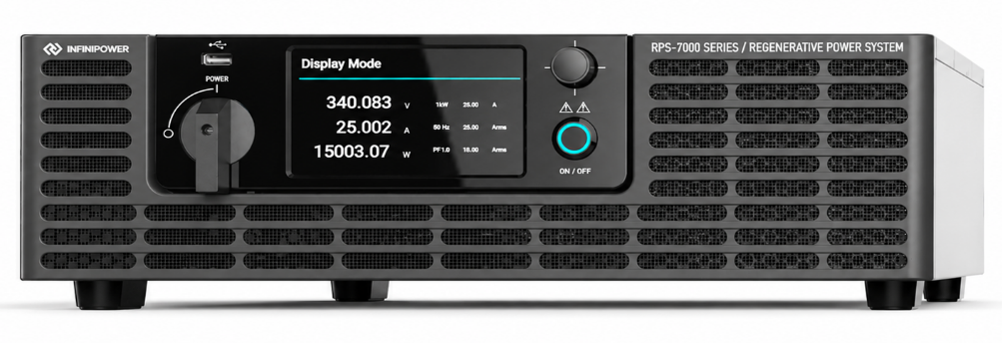
To address increasingly complex testing requirements, the INFINIPOWER RPS-5000 series provides a comprehensive validation solution.
With advanced power simulation technology and high-efficiency regenerative capability, the RPS-5000 enables engineers to perform precise and reliable compliance testing across multiple international standards.
Paired with the PowerVUE remote control software, the system features built-in automated test templates aligned with IEC standards, supporting a wide range of low-frequency immunity tests within the IEC 61000 series.
Its intuitive graphical interface significantly simplifies complex test sequences, improving both R&D efficiency and certification workflows.
For a complete list of supported standards and detailed specifications, please visit our [product page].
Interested in learning more about DC power testing practices?
Feel free to contact our technical team.