1. Introduction: The Energy Transition and the Evolution of Power Electronics Testing
In recent years, as the world accelerates the energy transition, electric vehicles (EVs), renewable energy, and distributed grid technologies have advanced at a rapid pace. The application scope and technical complexity of modern power electronics have grown exponentially. From onboard chargers (OBC) in new energy vehicles and home/public charging stations to large-scale solar PV, energy storage, and smart grid solutions, nearly all critical applications now rely on highly stable and reliable power supply and load control.
Accordingly, the testing requirements faced by engineers and R&D teams have far surpassed simple voltage and current measurement or traditional resistive load testing. Today’s testing must cover complex power cycling, abnormal load simulation, efficiency validation, thermal design assessment, and safety/fault-tolerance analysis.
In charging infrastructure, for example—such as fast charging stations, high-power DC chargers, V2G (Vehicle-to-Grid), and V2H (Vehicle-to-Home)—the accurate reproduction of “load diversity” and real-world operating conditions is fundamental for ensuring product performance, compatibility, and safety. Factors like state-of-charge (SOC), temperature, aging, and charging protocol (CCS, CHAdeMO, GB/T) all influence battery charging/discharging characteristics. Only by leveraging AC/DC load simulation in the lab can we rigorously verify product response under complex scenarios, ensuring that chargers, inverters, and energy storage systems operate reliably in the field.
Traditional resistive loads or basic hardware loops may suffice for simple systems but are insufficient for today’s advanced EVs, high-performance converters, and smart grid devices. Old test methods cannot offer programmable, dynamic, or high-frequency composite load conditions. This leads to low test efficiency, missed latent faults, and gaps in compliance with strict regulatory scenarios.
AC/DC load simulation has thus emerged as an essential technology in modern power electronics. These simulators provide engineers with dynamic, composite, and repeatable AC or DC loads, supporting constant current (CC), constant voltage (CV), constant power (CP), and dynamic load modes. Combined with advanced digital control, PWM, real-time feedback algorithms, and automated test software, they bring unprecedented flexibility, efficiency, and data reliability to engineering teams.
2. What is AC/DC Load Simulation? — Definitions, Technical Principles, and Test Categories
AC/DC load simulation refers to the use of programmable electronic equipment to recreate, in laboratory or production environments, the various load conditions products may face in real-world use. Traditional loads—composed of resistors, inductors, or capacitors—can only simulate fixed or simple electrical conditions. Modern AC/DC electronic load simulators, by contrast, use advanced power electronics (MOSFETs, SiC, GaN), DSPs, high-frequency drivers, and precision control loops to accurately reproduce constant current (CC), constant voltage (CV), constant power (CP), dynamic cycles, faults, and harmonic loads as configured by the user.
The key strengths of this approach are repeatability and flexibility. For instance, in EV charger testing, engineers can program voltage/current curves for various vehicle models and charging protocols, validating responses to SOC changes, surges, overloads, and short circuits—something impossible with only real vehicles or basic loads. Such programmable electronic loads ensure every test is performed under identical, traceable, and standards-compliant conditions.
Based on test objectives, AC/DC load simulation usually covers the following major modes:
-
Constant Current (CC): Maintains a set current; used for battery charge/discharge, power supply output capability, and overcurrent protection tests.
-
Constant Voltage (CV): Maintains a set voltage; applicable to power supply regulation, inverter output, and regulator design evaluation.
-
Constant Power (CP): Dynamically calculates and maintains a set output power, ideal for simulating changing load power in motors or batteries.
-
Dynamic/Arbitrary Load: Supports auto-switching among multiple programmed current/voltage/power steps for transient or surge response testing.
-
Harmonic and Abnormal Simulation: Superimposes harmonics, pulses, and other non-ideal signals to test resilience and protection against power quality disturbances.
Modern AC/DC load simulators have thus greatly expanded the capabilities of engineers across design, validation, production QA, and regulatory certification—effectively reducing failure risk and speeding up innovation.
3. The Operating Principles of AC/DC Load Simulation — Hardware/Software Architecture & Simulation Technologies
To perform effective AC/DC load simulation, high-precision power components, active cooling, and digital control modules must be seamlessly integrated with automated test platforms and data analysis tools.
Hardware:
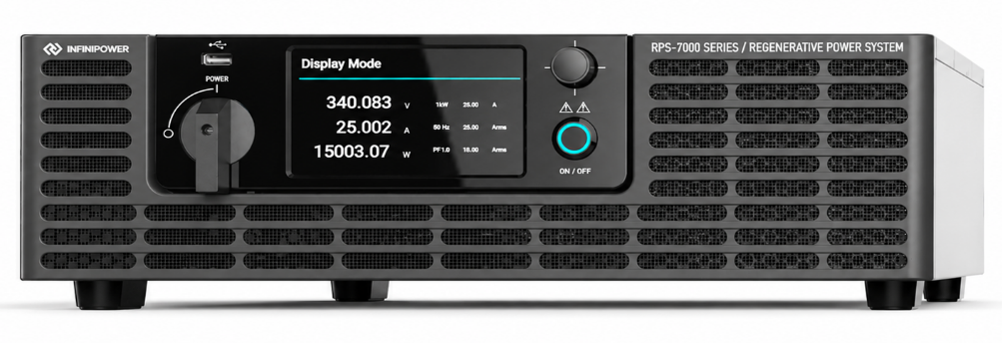
State-of-the-art simulators incorporate high-efficiency SiC MOSFET modules, full-digital DSP control, real-time feedback algorithms, intuitive touchscreen interfaces, and multiple communication interfaces (USB, LAN, GPIB, CAN) for easy integration into automated test lines and remote management systems. Many now feature four-quadrant regenerative capability, functioning as both source and sink—recycling energy back to the grid, reducing heat and power waste, and enabling simulation of a wide spectrum of operating states.
Software:
Modern AC/DC load simulators provide powerful parameter setting, waveform editing, report generation, real-time monitoring, and standards-specific test modules (e.g., IEC 61000-4-11 voltage dips, UL 1741 grid connection). Graphical interfaces allow engineers to quickly program complex load waveforms (LIST, STEP, PULSE, SYNTHESIS), auto-apply regulatory test routines, and reduce human error.
Additional Innovations:
Advanced simulators feature real-time data monitoring and auto-calibration. Built-in routines can detect abnormalities and adjust output instantly, maintaining accuracy and stability even during extended tests. Test data is automatically logged to local servers or the cloud, enabling big data analytics, QA traceability, and AI-driven test automation.
The real innovation in modern AC/DC load simulation is the marriage of exceptional hardware performance with highly automated, parameterized software—helping companies break through testing limits and advance toward digital transformation and intelligent QA.
4. Applications of AC/DC Load Simulation in Charging Test Industries — From EV Charging to Regulatory Certification
As EVs, energy storage, and renewable energy become mainstream globally, the application scenarios for AC/DC load simulation have become increasingly diverse—now a competitive advantage in the industry.
Take charging station and equipment testing as an example:
Requirements include high variability, multi-protocol support, robust safety mechanisms, and high efficiency/low loss.
-
EV Chargers must accommodate diverse batteries, vehicle types, and global standards (CCS, CHAdeMO, GB/T). Traditional loads cannot simulate protocol switching, dynamic load changes, or surges, risking field incompatibilities or hidden safety issues. Programmable AC/DC loads allow engineers to fully verify efficiency, compatibility, and fault tolerance across all SOCs, temperatures, and environments.
-
Power Converters (PCS, OBC) and Storage Inverters (BESS, ESS) require periodic overload, fault, harmonic, and environmental stress simulation to ensure reliability against harsh weather, grid instability, and user abuse.
-
Regulatory Standards: Modern load simulators support IEC 61000-4-11, IEC 62116, and other standards, enabling instant generation of complex waveforms and harmonics for pre-certification.
-
Economic Impact: Regenerative designs recycle energy, dramatically cutting heat, power, and cooling costs—especially valuable in high-volume production and long-duration tests.
Thus, AC/DC load simulation is not just a tool for better product quality or lower costs, but a key enabler for entering global markets and passing certifications. As the technology matures, its role will expand into AI server power, aerospace, defense, smart appliances, and more—becoming foundational to the entire power electronics industry.
5. How AC/DC Load Simulation Safeguards Product Reliability and Safety
Load simulation is vital for enhancing reliability and safety in modern charging systems and power electronics. By simulating:
-
Overload, short circuit, abnormal voltage, and surges
-
Dynamic charging states and variable loads
-
Prolonged high-load operation and thermal cycling
-
Multi-protocol, multi-vehicle, and multi-component compatibility
Engineers can identify potential failure modes before product launch, optimize protection mechanisms, and reduce post-launch maintenance or recall costs.
Reliability testing also covers protocol compatibility, environmental variations, and unstable supply, ensuring that products remain robust and safe under real-world conditions.
Key Simulation Scenarios and Purposes
| Test Item | Simulation Content | Typical Applications | Purpose |
|---|---|---|---|
| Overload/Short Circuit | Fast switching to extreme high load/short | Charging piles, converters | Validate overcurrent protection |
| Dynamic Load Simulation | High-frequency switching, charge curve steps | EV charging, UPS | Verify transient response |
| Environmental Stress | Operation under varied temp/humidity | Onboard charging, solar | Find thermal runaway/materials |
| Harmonics & Disturbance | Superimposed grid harmonics/voltage dips | Power design, industry | Strengthen noise immunity |
6. AC/DC Load Simulation for Efficiency and Power Design Optimization
Given global demands for energy efficiency and carbon reduction, load simulation is indispensable in power product validation. Modern AC/DC load simulators can precisely set light to full loads, overloads, and continuously monitor power loss, temperature rise, and conversion efficiency.
Design engineers can analyze efficiency across operating points, test various architectures, and optimize designs to minimize energy waste and maximize real-world performance.
Key Parameters for Efficiency and Design Optimization
| Parameter | Test Objective | Data Use | Industry Value |
|---|---|---|---|
| Conversion Eff. | Validate efficiency at loads | Select optimal design | Boost energy use, reduce costs |
| Power Factor (PF) | Assess line power quality | Ensure supply stability | Lower harmonics, grid reliability |
| Thermal Design | Check sustained high-load temps | Optimize cooling | Extend life, enhance reliability |
| Load Stability | Consistency across load states | Control algorithm tuning | Stronger compatibility for complexity |
Through continuous monitoring and analysis, companies can speed new product cycles, reduce design risks, and enhance competitiveness.
7. AC/DC Load Simulation for Regulatory Compliance and Market Certification
With ever-tightening safety, compatibility, and performance standards, regulatory testing is essential before market entry. AC/DC load simulators can automate complex tests required by global standards (IEC, UL, IEEE), vastly increasing efficiency and accuracy.
In the lab, products can be subjected to rapidly changing, standards-defined load scenarios—voltage dips, frequency variations, harmonic injection, and low-voltage ride-through—enabling rapid, compliant data and report generation.
Common Regulatory and Certification Tests
| Standard | Test Content | Target Products | Test Goal |
|---|---|---|---|
| IEC 61000-4-11 | Voltage dips/interruptions/variation | EV charging/power equipment | Test grid abnormal resilience |
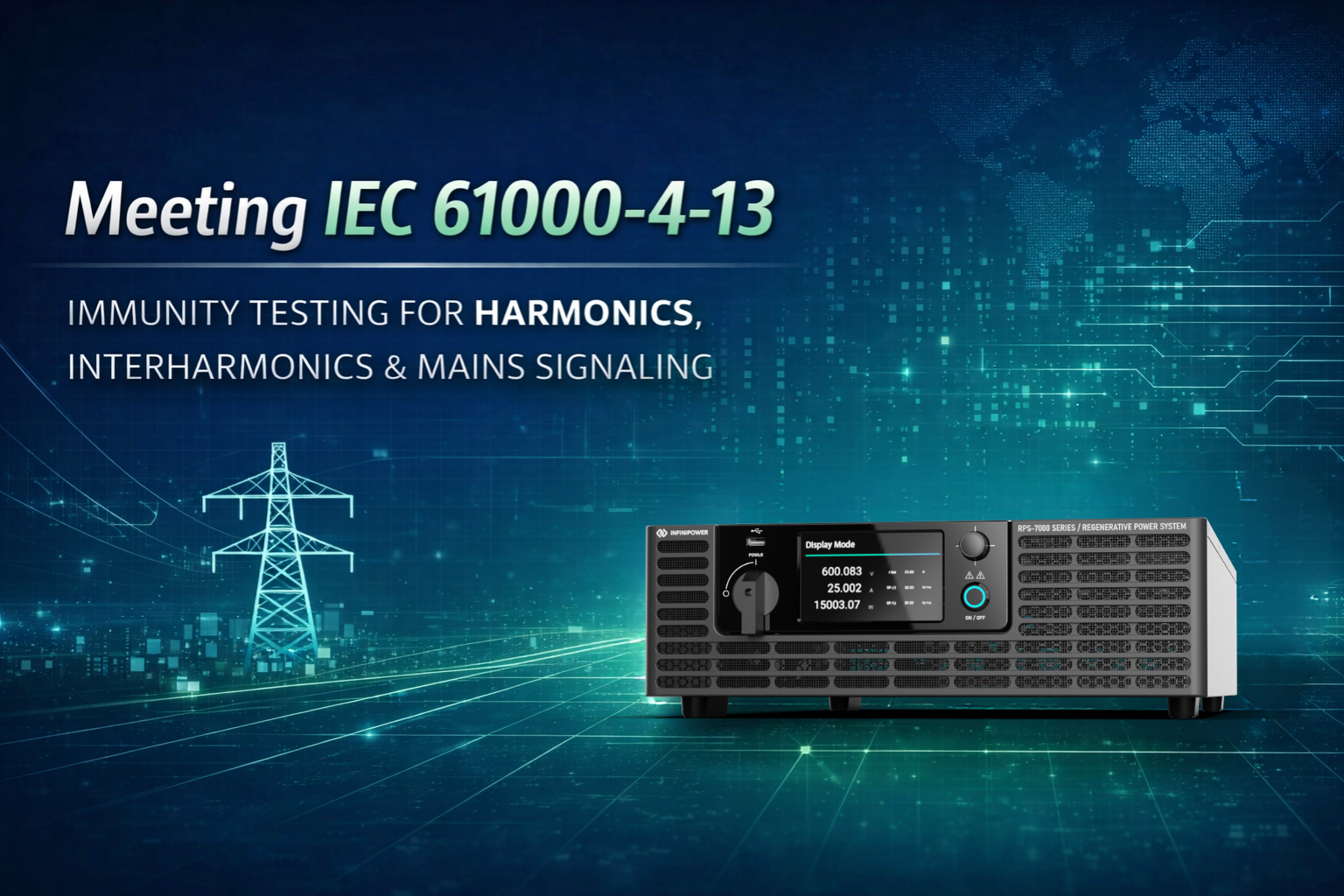
| IEC 61000-4-13 | Harmonic injection/system response | Converters, storage devices | Assess harmonic immunity |
| UL 1741 | Grid-tie, islanding, LVRT | Inverters, solar/storage | Grid safety and interoperability |
| IEEE 1547 | Distributed energy interconnection | Renewable energy devices | Validate safe interconnection |
Proper use of AC/DC load simulation can dramatically shorten certification timelines, boost compliance rates, and strengthen global market positioning.
8. The Advantages of AC/DC Load Simulation in Cost and Time Efficiency
Testing personnel, equipment costs, and test cycles directly affect time-to-market and profitability. Traditional manual or resistive load testing is labor-intensive, slow, and can result in inconsistent or unrepeatable outcomes.
Modern AC/DC load simulation:
-
Automates tests, reducing manual intervention and error
-
Provides built-in protection, minimizing damage risk to devices under test
-
Enables instant data collection, aggregation, and analytics
-
Reduces the need for multiple test rigs, minimizing maintenance and total cost of ownership
| Test Method | Labor Cost | Equipment Wear | Repeatability | Data Management | Overall Cycle |
|---|---|---|---|---|---|
| Traditional Manual/Resistor | High | High | Poor | Difficult | Long |
| Programmable Simulation | Low | Low | Good | Easy | Short |
| Automated Digital Platform | Minimal | Minimal | Excellent | Excellent | Shortest |
9. Technical Challenges and Future Development Trends
Despite its critical role, the adoption of AC/DC load simulation still faces challenges:
-
Complexity: Advanced features require specialized knowledge for operation and maintenance.
-
Precision & Cost: High-end devices using next-gen semiconductors (SiC, GaN) offer top performance but increase costs and maintenance requirements.
-
Integration: Systems must connect seamlessly with automation software, cloud monitoring, and AI analytics, demanding cross-disciplinary expertise.
-
Thermal Management: Prolonged high-power operation calls for advanced cooling and energy recovery.
-
Scalability: Market needs are pushing toward modular, reconfigurable hardware and intuitive, user-friendly software.
Future directions will emphasize:
-
Modular hardware and user-friendly software interfaces
-
AI-driven self-diagnosis and auto-calibration
-
Full integration with Industry 4.0, automated QA, and lifecycle digitalization
-
Open API connectivity and big data analytics
10. Conclusion & Industry Outlook
AC/DC load simulation is more than just a testing tool—it is a strategic enabler driving the ongoing upgrade and competitiveness of the new energy and power electronics industries. As applications for EVs, renewables, and smart grids proliferate, load simulation has evolved from a mere lab instrument into an integral solution spanning R&D, certification, production, and quality assurance.
Looking ahead, as AI, IoT, cloud computing, and big data become pervasive, AC/DC load simulation will merge further with smart manufacturing, remote maintenance, and predictive analytics. This will allow enterprises to iterate faster, improve design yields, and ensure products remain reliable, safe, and efficient under increasingly demanding regulations and complex use cases.
For every technology leader in charging and power, embracing AC/DC load simulation is not only an upgrade in test methodology—it is a cornerstone of competitive strategy and long-term sustainability.
References for AC/DC Load Simulation
-
International Electrotechnical Commission (IEC). (2017). IEC 61000-4-11: Electromagnetic compatibility (EMC) – Part 4-11: Testing and measurement techniques – Voltage dips, short interruptions and voltage variations immunity tests. Geneva: IEC.
https://webstore.iec.ch/publication/1376 -
International Electrotechnical Commission (IEC). (2015). IEC 61000-4-13: Electromagnetic compatibility (EMC) – Part 4-13: Testing and measurement techniques – Harmonics and interharmonics including mains signalling at a.c. power port, low-frequency immunity tests. Geneva: IEC.
https://webstore.iec.ch/publication/1378 -
Underwriters Laboratories (UL). (2022). UL 1741: Standard for Inverters, Converters, Controllers and Interconnection System Equipment for Use With Distributed Energy Resources. Northbrook, IL: UL.
https://www.shopulstandards.com/ProductDetail.aspx?UniqueKey=28154 -
Institute of Electrical and Electronics Engineers (IEEE). (2020). IEEE Std 1547-2018: IEEE Standard for Interconnection and Interoperability of Distributed Energy Resources with Associated Electric Power Systems Interfaces. New York, NY: IEEE.
https://standards.ieee.org/standard/1547-2018.html -
International Electrotechnical Commission (IEC). (2001). IEC 61851-1: Electric vehicle conductive charging system – Part 1: General requirements. Geneva: IEC.
https://webstore.iec.ch/publication/25098 -
International Energy Agency (IEA). (2023). Global EV Outlook 2023: Catching up with climate ambitions. Paris: IEA.
https://www.iea.org/reports/global-ev-outlook-2023 -
U.S. Department of Energy (DOE), Office of Energy Efficiency & Renewable Energy. (2024). Energy storage testing and validation. Retrieved from
https://www.energy.gov/eere/vehicles/articles/energy-storage-testing-and-validation -
International Electrotechnical Commission (IEC). (2016). IEC 62116: Test procedure of islanding prevention measures for utility-interconnected photovoltaic inverters. Geneva: IEC.
https://webstore.iec.ch/publication/24134 -
Electric Power Research Institute (EPRI). (2021). Best practices for grid simulator and load testing in renewable energy integration. Palo Alto, CA: EPRI.
https://www.epri.com/research/products/000000003002022982 -
Infinipower Technology Co., Ltd. (2024). RPS-5000 Datasheet – Regenerative AC/DC Power Simulator and Load (V1.0). Retrieved from
https://www.infinipowertech.com/