Introduction
Three‐phase voltage is a cornerstone of modern electrical power systems, powering everything from industrial machinery and renewable energy installations to commercial buildings and electric vehicle (EV) charging stations. Unlike single‐phase systems that are typically used for residential loads, three‐phase systems deliver power more efficiently and reliably by using three alternating currents offset by 120° from one another. This guide delves deep into the fundamental concepts of three‐phase voltage, compares it with single‐phase power, examines measurement techniques, explores various system configurations (Wye vs. Delta), and reviews the international standards and regulations (such as IEC 60038, NFPA 70, and IEEE 141) that underpin safe and efficient operation. We also discuss practical criteria for selecting an AC power source—an essential step when testing equipment like solar inverters or EV chargers. For engineers and industry professionals, advanced solutions such as the RPS‑5000 provide the flexibility and precision needed to simulate real‐world grid conditions. Whether you’re an electrical engineer, a facility manager, or a technical inspector, understanding these concepts is crucial for ensuring that your power systems are safe, efficient, and future‑proof.
1. Understanding Three‐Phase Voltage
1.1 Definition and Basic Principles
Three‐phase voltage refers to an AC power system in which three separate voltage waveforms are produced, each shifted by 120° in phase relative to the others. In a perfectly balanced system, the sum of the instantaneous currents in the three phase conductors is zero, ensuring that the total power delivered remains constant throughout each cycle. This constant power delivery is critical for running heavy industrial loads, large motors, and high‐power equipment without the fluctuations (or “pulsations”) inherent in single‐phase power.
Key points:
- Constant Power Flow: Overlapping waveforms ensure that while one phase’s voltage is dropping, the other phases are peaking, providing a continuous energy stream.
- Balanced Loads: The inherent balance of a three‑phase system means that the neutral (if present) carries little or no current, allowing for smaller, less costly neutral conductors.
- Efficiency: For the same current capacity, three‐phase systems can deliver approximately three times the power of single‐phase systems while using less conductor material.
1.2 Mathematical Relationship: The √3 Factor
One of the most important relationships in three‐phase systems is between the line-to-neutral voltage (Vₗₙ) and the line-to-line voltage (Vₗₗ). In a balanced three‐phase Wye (Star) system, the line-to-line voltage is given by:
Vₗₗ = √3 × Vₗₙ
This relationship means that for a nominal phase voltage of 230 V (commonly used in Europe), the corresponding line-to-line voltage is about 400 V. In North America, a common three-phase system is 120/208 V, where 120 V is the phase voltage and 208 V (≈ 120 V × 1.732) is the line voltage. This √3 factor is central to many design and testing calculations and enables engineers to accurately size equipment and cabling for efficient power delivery.
1.3 Historical Perspective and Development
The concept of three‐phase power was developed in the late 19th century by several pioneering engineers—including Galileo Ferraris, Nikola Tesla, and Mikhail Dolivo-Dobrovolsky. Their work laid the foundation for modern power distribution. The early three‑phase systems enabled efficient transmission over long distances and powered industrial motors with smoother operation. Over time, as electrical grids evolved, three‐phase systems became the standard for high‐power applications worldwide. Today, virtually all utility grids use three‑phase power for transmission and distribution, with single‑phase power derived for residential use when necessary.
2. Single‑Phase vs. Three‑Phase Systems
2.1 Single‑Phase Systems
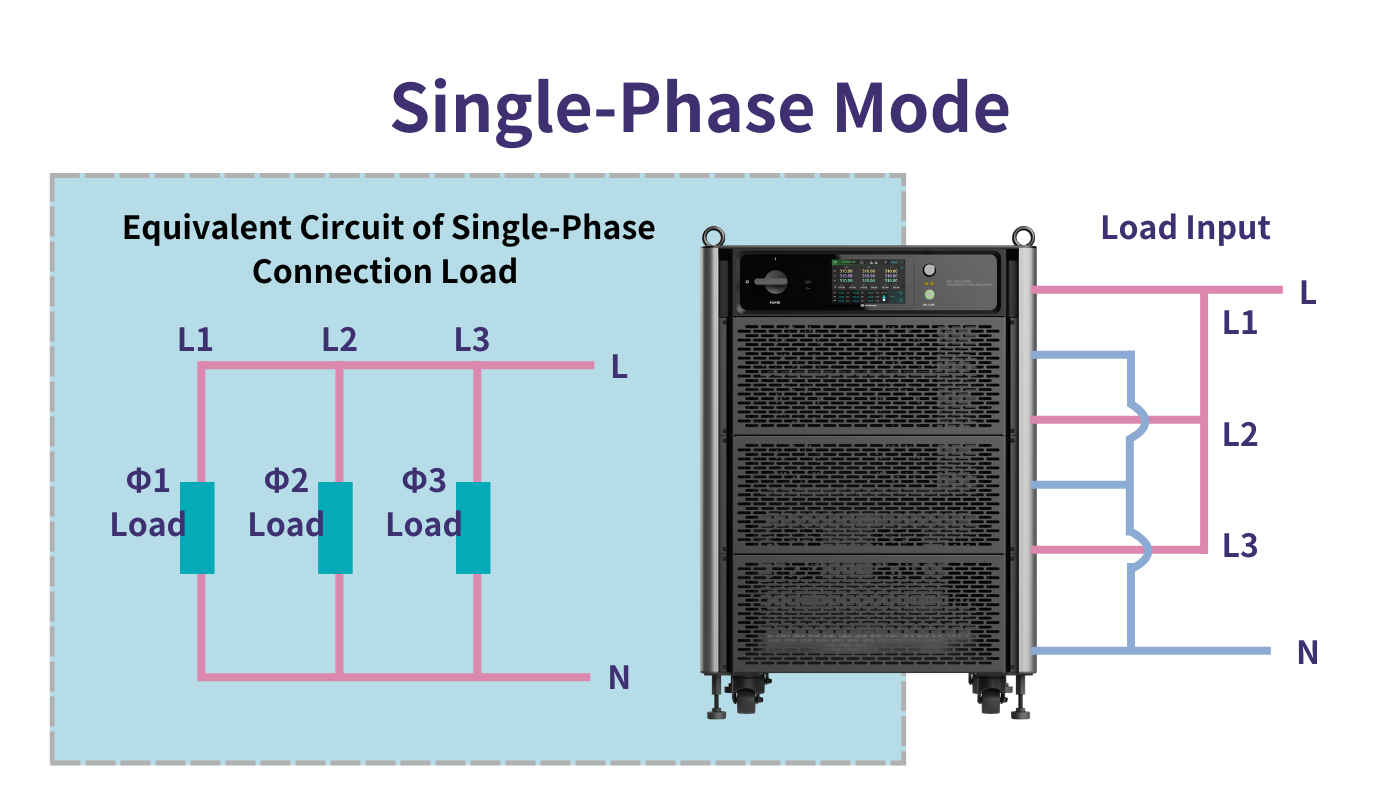
Single-phase AC systems use one alternating voltage waveform (typically delivered via one “hot” wire and a neutral). In these systems, the voltage rises and falls sinusoidally and drops to zero at two points in each cycle, resulting in pulsating power delivery. While single-phase power is sufficient for lower-power applications—such as lighting, heating, and household appliances—it lacks the continuous power characteristic required for heavy loads or industrial equipment.
Key characteristics:
- Configuration: Typically two conductors (phase and neutral) plus a protective ground.
- Applications: Residential homes, small offices, and low-power industrial loads.
- Efficiency: Limited in handling high loads due to pulsating power delivery.
2.2 Three‑Phase Systems
Three-phase systems use three conductors (and optionally a neutral in a Wye configuration) to deliver power. Each phase is offset by 120° relative to the others, resulting in a near-constant overall power output. This is ideal for industrial applications, large motors, and equipment requiring high power with minimal vibrations or torque fluctuations.
Key characteristics:
- Configuration: Either a three-wire or a four-wire system (if a neutral is included).
- Advantages: Higher efficiency, constant power flow, smoother operation, and reduced conductor material per unit power delivered.
- Applications: Factories, data centers, renewable energy systems, EV charging stations, and heavy industrial loads.
2.3 Comparison Table
| Aspect | Single‑Phase | Three‑Phase |
|---|---|---|
| Number of Conductors | 1 phase + neutral (and ground) | 3 phases (with optional neutral and ground) |
| Voltage Delivery | Pulsating (drops to zero twice per cycle) | Nearly constant (overlapping waveforms) |
| Efficiency | Lower for heavy loads | Higher – can deliver 3× power with ~1.5× wires |
| Typical Applications | Residential, small appliances | Industrial motors, commercial equipment, EV chargers |
| Cost & Material | Requires larger wires for high power | Uses less conductor material for equivalent power |
This table illustrates that while single‑phase systems are simpler and sufficient for small loads, three‑phase systems are far more efficient and economical for high-power, industrial applications.
3. Benefits of Three‑Phase Power
3.1 Constant and Smooth Power Delivery
The primary benefit of three‑phase systems is the constant power delivery. Because the phases are offset by 120°, there is always at least one phase supplying peak voltage. This results in a smooth, continuous energy transfer, reducing mechanical vibrations and fluctuations in devices such as motors and compressors. For industries where equipment reliability is critical, constant power delivery means less wear and lower maintenance costs.
3.2 Enhanced Efficiency and Lower Losses
Three‑phase systems deliver more power for the same conductor size compared to single‑phase systems. This efficiency is achieved because:
- The current is distributed evenly among three phases.
- The use of thinner conductors (or fewer materials overall) results in lower copper or aluminum losses.
- Power factor and voltage regulation are generally improved, resulting in reduced energy waste during transmission.
3.3 Flexibility in Voltage Levels
In a three‑phase Wye configuration, two distinct voltage levels are available:
- Line-to-neutral voltage (Vₗₙ): Used to power single‑phase loads.
- Line-to-line voltage (Vₗₗ): Ideal for high‑power equipment.
This flexibility allows three‑phase systems to serve a broad range of applications. For example, in many commercial settings, lighting and outlets might use 230 V (line-to-neutral), while heavy machinery and motors run on 400 V (line-to-line).
3.4 Improved Motor Performance
Three‑phase motors are self-starting and produce a more consistent torque compared to single‑phase motors. The inherent rotating magnetic field in a three‑phase system ensures that these motors run with minimal pulsations, reducing noise and increasing efficiency. This is particularly beneficial in applications such as HVAC systems, industrial pumps, and compressors, where reliable motor operation is crucial.
3.5 Reduced Conductor Material and Cost Savings
By transmitting more power with fewer conductors, three‑phase systems reduce the overall cost of wiring. The increased power density means that utilities and large facilities can achieve significant cost savings in both initial installation and long‑term maintenance.
4. Measuring Three‑Phase Voltage
Accurate measurement of three‑phase voltage is critical for testing, maintenance, and safety. Below are key measurement techniques and considerations.
4.1 Types of Measurements
- Line-to-Line Voltage (Vₗₗ): Measured between any two phase conductors. In a balanced Wye system, Vₗₗ is √3 times the phase-to-neutral voltage.
- Line-to-Neutral Voltage (Vₗₙ): Measured between any phase conductor and the neutral. This is the voltage that most equipment is designed to operate on.
- Phase Sequence: Determining the correct phase order is crucial for proper motor operation. Devices such as phase sequence meters are used to ensure that the three phases are in the proper order (commonly labeled as A, B, and C).
4.2 Measurement Instruments
- Digital Multimeters/Voltmeters: These are used for basic voltage measurements. Ensure that the meter is rated for the maximum voltage in the system.
- Power Quality Analyzers: These instruments provide detailed analysis, including harmonic content, frequency, and voltage fluctuations.
- Oscilloscopes: For capturing and analyzing waveform details, especially when troubleshooting or performing transient tests.
4.3 Safety Considerations
When working with three‑phase systems:
- Always use equipment rated for the maximum expected voltage.
- Follow proper lockout/tagout procedures.
- Wear personal protective equipment (PPE) and adhere to industry safety standards (e.g., NFPA 70E).
- Verify that instruments are properly calibrated and that connections are secure.
Accurate measurements not only ensure that the equipment is operating within specified tolerances but also provide crucial data for troubleshooting and system optimization.
5. Configurations: Wye (Star) vs. Delta
The two most common configurations for three‑phase systems are Wye (Star) and Delta. Each configuration offers unique advantages depending on the application.
5.1 Wye (Star) Configuration
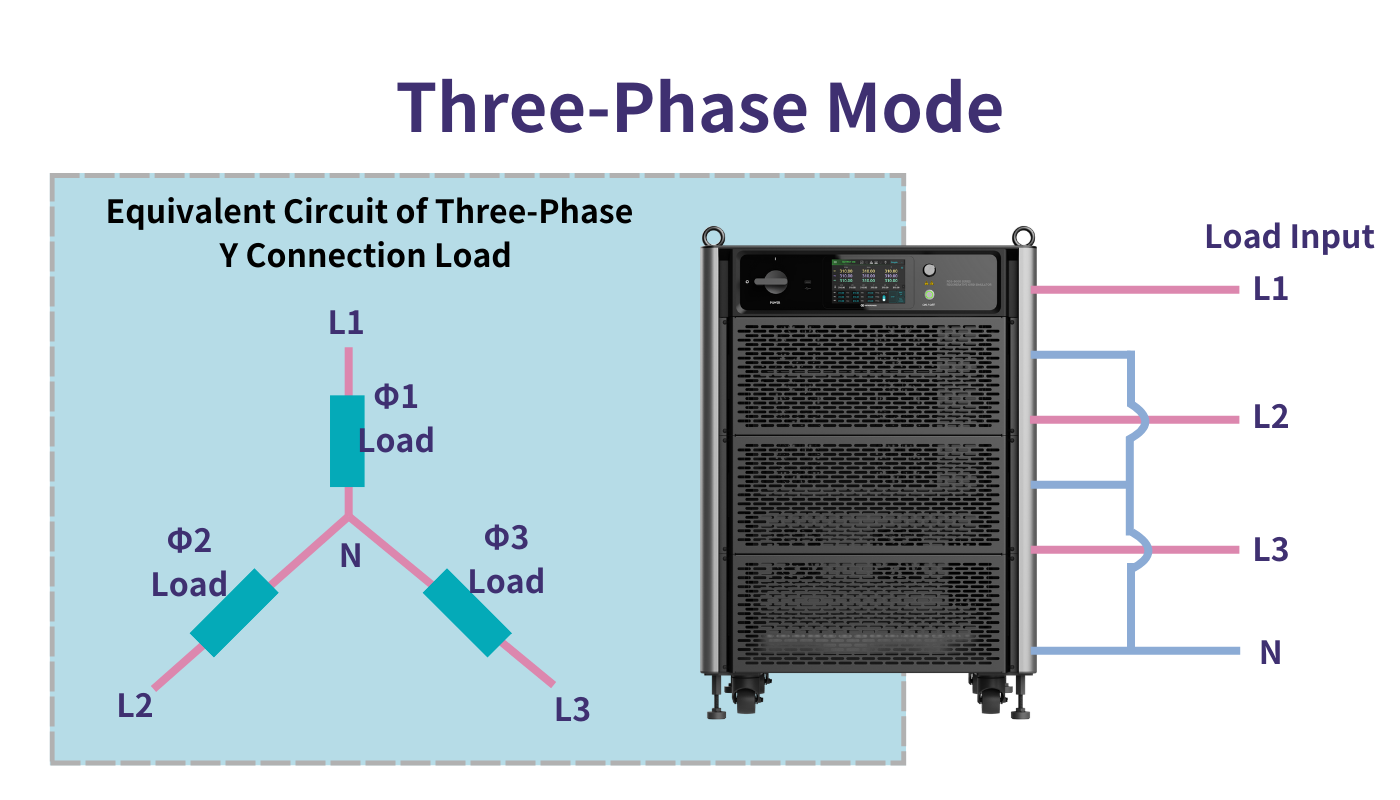
In a Wye system, one end of each phase winding is connected to a common neutral point. This configuration offers:
- Dual Voltage Availability: Both line-to-neutral and line-to-line voltages are available. For example, a 230/400 V system provides 230 V from phase to neutral and 400 V between phases.
- Flexibility: Ideal for systems that need to supply both single‑phase and three‑phase loads. Residential lighting and outlets, for instance, operate off the phase-to-neutral voltage.
- Easier Balancing: The presence of a neutral helps in balancing unbalanced loads by providing a return path.
5.2 Delta Configuration
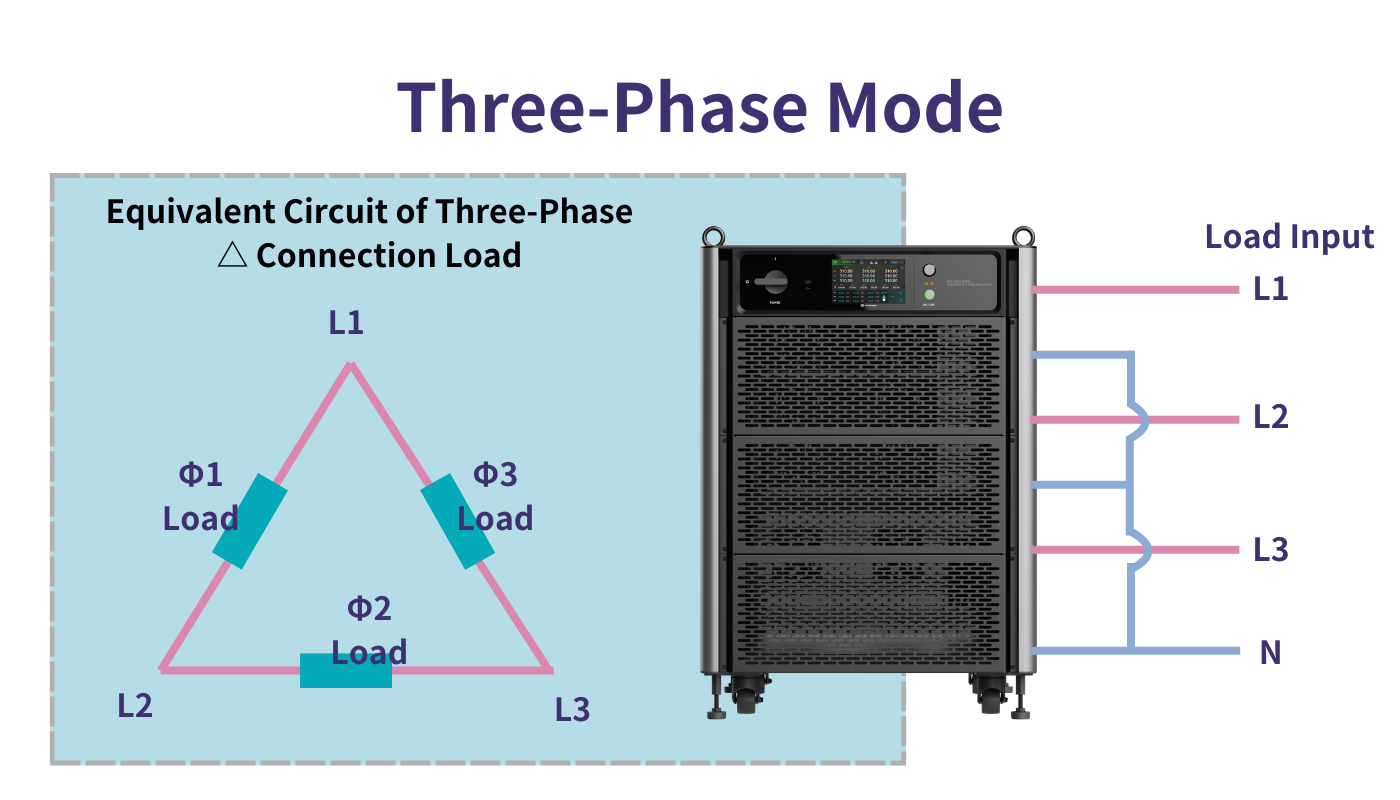
In a Delta configuration, the windings are connected end-to-end in a closed loop, forming a triangle:
- Simplicity: Requires only three wires; no neutral is provided.
- High Power Capability: Delta systems are often used in applications where large motors and heavy loads are present, and where the neutral is not required.
- Fault Tolerance: Delta systems can sometimes continue operating in an open-delta (or V) configuration if one transformer fails, although at reduced capacity.
5.3 Application Considerations
When selecting between Wye and Delta, consider:
- Load Type: If the system must support both single‑phase and three‑phase loads, a Wye configuration is typically preferred.
- Fault Protection and Grounding: Wye systems provide a clear grounding point via the neutral, which is critical for safety.
- Equipment Compatibility: Some motors and transformers are designed specifically for delta or wye operation. Always verify equipment specifications.
6. International Standards and Regulatory Compliance
6.1 IEC 60038: Standard Voltages
IEC 60038 is the international standard that specifies the recommended nominal voltage values for AC systems. Key details include:
- Standardized Voltages: For example, the recommended values for three‑phase systems in Europe are 230 V (phase-to-neutral) and 400 V (line-to-line).
- Migration History: Historically, systems used values such as 220/380 V or 240/415 V, but these have largely been standardized to 230/400 V by IEC 60038.
- Global Consistency: Adhering to IEC 60038 ensures that equipment designed for one market will operate reliably in another, fostering global interoperability.
6.2 NFPA 70 (NEC): Safety and Installation Guidelines
NFPA 70, also known as the National Electrical Code (NEC), is a U.S. standard that governs the safe installation of electrical wiring and equipment. Important points include:
- Safety Requirements: NEC provides detailed requirements for wiring methods, circuit protection, grounding, and installation practices.
- Regular Updates: The code is revised every three years to incorporate new technology and safety practices.
- Adoption: Although the NEC is not a federal law, most U.S. states and municipalities adopt it (often with local amendments) as the minimum standard for electrical installations.
6.3 IEEE 141: Recommended Practice for Electric Power Distribution
IEEE 141 (commonly known as the “Red Book”) offers guidelines for the design and distribution of industrial power systems. It covers:
- System Design: Recommendations for transformer connections, voltage regulation, and load balancing.
- Safety and Reliability: Best practices to ensure that power distribution is safe and efficient.
- Industry Adoption: Widely used by industrial facilities and design engineers to ensure robust power system design.
Adhering to these standards is critical when selecting or designing an AC power source, as they provide the technical and safety benchmarks necessary for reliable operation.
7. Applications of Three‑Phase Systems

7.1 Industrial and Commercial Applications
Three‑phase systems are the backbone of industrial power distribution. They are used to power:
- Large Motors and Drives: Such as those found in manufacturing plants, HVAC systems, and conveyor systems.
- Heavy Machinery: Equipment that requires a steady, high-power supply to operate efficiently.
- Commercial Buildings: Where multiple systems (lighting, elevators, HVAC) are integrated into a single power infrastructure.
The efficiency and reliability of three‑phase power mean lower operational costs and reduced maintenance downtime, which are critical factors in industrial applications.
7.2 Renewable Energy and Microgrids
As renewable energy sources become more widespread, the ability to simulate and test grid conditions is increasingly important. Three‑phase power sources are essential for:
- Solar and Wind Inverters: Testing grid-tied inverters requires a stable three‑phase supply that replicates real-world conditions.
- Microgrid Simulation: For research and development, programmable AC sources can mimic various grid scenarios, including voltage sags, phase imbalances, and transient events.
- Energy Storage Systems: Batteries and inverters in renewable systems often interface with three‑phase grids, requiring precise testing to ensure compliance with international standards.
7.3 Electric Vehicle Charging and Transportation
The electric vehicle (EV) market relies heavily on three‑phase power, particularly for fast chargers and large commercial charging stations. Key points include:
- High Power Density: Three‑phase systems are capable of delivering the high power levels required for rapid EV charging.
- Efficiency: Lower conductor material usage and consistent power output result in reduced energy losses during charging.
- Testing and Certification: Accurate simulation of three‑phase grid conditions is essential when certifying EV charging equipment for safety and performance standards.
7.4 Data Centers and IT Infrastructure
Data centers require highly stable and efficient power supplies to maintain uptime and protect sensitive equipment. Three‑phase power is used to:
- Supply High-Density Loads: Powering servers, cooling systems, and networking equipment.
- Ensure Redundancy: Three‑phase systems help balance loads and provide backup capabilities in the event of a phase loss or fault.
- Optimize Efficiency: Consistent power delivery reduces downtime and minimizes the risk of equipment failure due to power fluctuations.
7.5 Aerospace, Defense, and Specialized Applications
Some specialized applications require unique three‑phase systems:
- 400 Hz Systems: Aircraft and military applications often use 400 Hz power for weight reduction and higher frequency benefits.
- Harsh Environment Testing: Regulated three‑phase sources are used to simulate various fault and transient conditions for equipment used in critical applications.
- Regenerative Testing: Advanced systems, such as the RPS‑5000, are designed to handle bi-directional power flow, essential for testing systems that both consume and generate power.
8. Selecting the Right AC Power Source
Choosing an appropriate AC power source for three‑phase applications requires careful consideration of multiple factors. Below are the key criteria to evaluate.
8.1 Phase Configuration and Flexibility
Determine if your testing or installation requires:
- Dedicated Three‑Phase Output: For heavy industrial loads or testing equipment designed for three‑phase operation.
- Dual Operation: Some power sources can be configured for either single‑phase or three‑phase output. This flexibility is valuable when testing equipment that may encounter both types of supplies in the field.
For example, our RPS‑5000 product is engineered to deliver both single‑phase and three‑phase outputs, providing versatility for a variety of testing scenarios.
8.2 Voltage and Frequency Range
- Voltage Range: Ensure the source can deliver both the line-to-neutral and line-to-line voltages required by your application. Typical ranges for low-voltage testing might be 0–300 V (phase-to-neutral), yielding up to approximately 520 V line-to-line.
- Frequency Range: The source should cover standard frequencies (50 Hz and 60 Hz) and possibly extend to other frequencies (such as 400 Hz for aerospace applications). Frequency stability is critical for accurate testing.
8.3 Power Rating and Current Capacity
The power source must be sized appropriately:
- Power Rating (kVA/kW): Match the source to the maximum load you expect to encounter. For industrial or EV charging tests, this could be tens of kilovolt-amperes.
- Current Capacity: Verify that each phase can handle the required current. Consider transient surges, inrush currents, and load balancing capabilities.
8.4 Regenerative (Bi-directional) Capability
In applications where power might be fed back into the source (e.g., testing motor drives or grid-tied inverters), a regenerative AC source is essential. A regenerative source can:
- Sink Power: Absorb power back from the load without damage.
- Improve Efficiency: By recapturing energy that would otherwise be wasted as heat.
- Enable Continuous Testing: Without the need for additional energy-dissipating equipment.
Products such as the RPS‑5000 are designed as four-quadrant systems, meaning they can handle both sourcing and sinking power, which is critical for modern, bidirectional testing applications.
8.5 Waveform Quality and Control
For precise testing and compliance verification, your power source should offer:
- Low Total Harmonic Distortion (THD): Ensuring that the output is a clean sine wave (typically less than 0.3% THD) unless distortion is intentionally introduced.
- Arbitrary Waveform Generation: The ability to simulate voltage sags, swells, transients, and harmonic distortion.
- Phase Angle and Imbalance Control: To mimic real-world conditions, including unbalanced loads or phase loss scenarios.
Advanced programmable AC sources enable complex test sequences that can replicate grid disturbances or transient events, ensuring that the equipment under test is robust and compliant with relevant standards.
8.6 Ease of Use and Integration
Consider practical factors:
- User Interface: A clear, intuitive interface (touchscreen or software-based) simplifies programming and monitoring.
- Remote Control Capabilities: Integration with automated test systems via SCPI commands, Ethernet, or USB is often essential in modern laboratories.
- Built-in Measurement and Data Logging: Some advanced power sources offer integrated voltage, current, and power monitoring, reducing the need for separate instruments.
- Software and Firmware Updates: Ongoing support from the manufacturer ensures that your power source stays up to date with evolving standards.
8.7 Compliance with International Standards
Your AC power source should comply with relevant standards and regulations:
- IEC 60038: Ensure that the output voltage levels meet international standards (e.g., 230/400 V for three-phase systems in many regions).
- NFPA 70 (NEC): The installation and operation must be in accordance with safety guidelines.
- IEEE 141: For industrial applications, following IEEE recommendations helps ensure robust power distribution and system reliability.
Compliance is not only about meeting technical specifications—it’s also about ensuring safety, interoperability, and market acceptance.
8.8 Cost, Reliability, and Future-Proofing
While advanced power sources may come at a higher upfront cost, consider:
- Long-Term Reliability: A robust, reliable power source reduces downtime and maintenance costs.
- Scalability: Choose a system that can be upgraded or expanded as testing requirements evolve.
- Vendor Support: Comprehensive support, calibration services, and firmware updates are valuable for long-term performance.
9. Real-World Applications and Case Studies

9.1 Renewable Energy Testing
In renewable energy installations, grid-tied inverters and energy storage systems are increasingly common. Testing these systems requires an AC source that can:
- Simulate Real-World Grid Conditions: Including voltage sags, frequency variations, and transient disturbances.
- Handle Bidirectional Power Flow: In scenarios where the inverter may feed power back to the grid.
- Adhere to Standards: Such as IEC 60038 and IEEE 1547, ensuring that the equipment meets regulatory requirements.
A programmable AC source like the RPS‑5000 is ideal for these applications, as it can be configured to replicate the conditions of a modern grid in a controlled laboratory environment.
9.2 Electric Vehicle (EV) Charger Testing
EV chargers, particularly fast chargers, demand a stable and high-power three‑phase input. When testing EV charging equipment:
- High Power Density: The source must deliver sufficient power across all three phases to replicate the high-demand conditions of commercial EV chargers.
- Transient Simulation: It must simulate voltage dips, surges, and phase imbalances that can occur in a live grid.
- Regenerative Functionality: For testing vehicle-to-grid (V2G) systems where power may be sent back to the source.
For such tests, the ability to simulate both standard and abnormal grid conditions is critical, ensuring that chargers are safe and reliable under all conditions.
9.3 Industrial Motor and Drive Testing
Large motors and variable frequency drives (VFDs) are the workhorses of the industrial sector. Testing these devices under various conditions ensures:
- Smooth Operation: Three‑phase power provides constant torque and reduced vibration.
- Fault Simulation: The ability to simulate phase loss, imbalances, and transient faults is key to assessing protective measures.
- Efficiency Measurement: Precise measurements of power quality, THD, and efficiency can be performed using integrated measurement tools in advanced AC sources.
Using a high-quality three‑phase source in a controlled lab setting helps engineers optimize motor performance and ensure compliance with safety and energy efficiency standards.
9.4 Data Center and Critical Facility Applications
Data centers rely on highly stable power supplies to minimize downtime and protect sensitive IT equipment. Key aspects include:
- Balanced Loads: The even distribution of power across three phases reduces stress on conductors and minimizes voltage drops.
- Redundancy and Backup: Three‑phase systems often form part of a larger, redundant power infrastructure that includes UPS systems and backup generators.
- Monitoring and Diagnostics: Integrated measurement capabilities allow for real-time monitoring of power quality, which is critical for early detection of issues.
Testing data center equipment with a three‑phase source helps validate that the system will perform reliably under load, even in the event of disturbances or failures.
9.5 Aerospace and Defense Systems
Some specialized applications, such as aerospace power systems, require unique testing conditions:
- High Frequency (400 Hz) Systems: Aircraft and certain military applications use 400 Hz power for weight reduction and improved performance.
- Transient and Fault Tolerance: Equipment in these sectors must be tested under extreme conditions, including rapid voltage changes and transient faults.
- Regenerative and Bidirectional Operation: In systems where power may be fed back during braking or regenerative cycles, the source must be capable of handling reverse power flow.
A versatile source that can simulate these conditions accurately is essential for the certification and safe operation of aerospace and defense systems.
10. Conclusion and Call to Action
Three‐phase voltage forms the backbone of modern electrical power systems. Its ability to deliver constant, efficient, and reliable power makes it indispensable for industrial, commercial, and specialized applications. This guide has explored the fundamental principles of three‐phase systems, the advantages over single‐phase power, measurement techniques, and the critical differences between Wye and Delta configurations. We have also examined international standards and regulatory requirements—such as IEC 60038, NFPA 70 (NEC), and IEEE 141—that ensure safety and interoperability across global markets.
When selecting an AC power source for testing or operational purposes, it is crucial to consider:
- The desired phase configuration and voltage range,
- The power rating and current capacity,
- The need for regenerative capability and waveform control,
- Compliance with international standards,
- And practical considerations such as ease of use and long-term reliability.
Advanced, programmable AC sources—like the RPS‑5000—provide the flexibility and precision required to simulate real-world grid conditions. They are engineered to meet the rigorous demands of testing renewable energy systems, EV chargers, industrial motors, and more.
For engineers, inspectors, and decision-makers looking to ensure that their equipment is safe, efficient, and compliant, investing in a quality three‑phase AC power source is not just a technical necessity—it is a strategic decision that can reduce operational costs and improve system reliability.
Ready to empower your testing and power distribution projects?
Contact us today to learn more about how advanced solutions like the RPS‑5000 can help you meet your performance and compliance goals. Visit our [Contact Us] page for personalized support and expert advice.
References
American National Standards Institute. (n.d.). IEC 60038 – Standard Voltages. Retrieved from
https://en.wikipedia.org/wiki/IEC_60038
National Fire Protection Association. (n.d.). NFPA 70 (National Electrical Code). Retrieved from
https://www.nfpa.org/codes-and-standards/all-codes-and-standards/list-of-codes-and-standards/detail?code=70
Institute of Electrical and Electronics Engineers. (n.d.). IEEE 141 – Recommended Practice for Electric Power Distribution for Industrial Plants. Retrieved from
https://standards.ieee.org/standard/141-1993.html
Fluke Corporation. (n.d.). Single-Phase vs. Three-Phase Power Explanation. Retrieved from
https://www.fluke.com/en-us/learn/blog/power-quality/single-phase-vs-three-phase-power
Grupel. (n.d.). What is the difference between single-phase and three-phase voltage?. Retrieved from
https://grupel.eu/en/blog/what-is-the-difference-between-single-phase-and-three-phase-voltage
Certified Commercial Property Inspectors Association. (n.d.). Commercial Electrical Systems: What Is Three-Phase Power?. Retrieved from
https://ccpia.org/commercial-electrical-systems-what-is-three-phase-power/