Why Does Ripple Still Exist in a DC Power System?
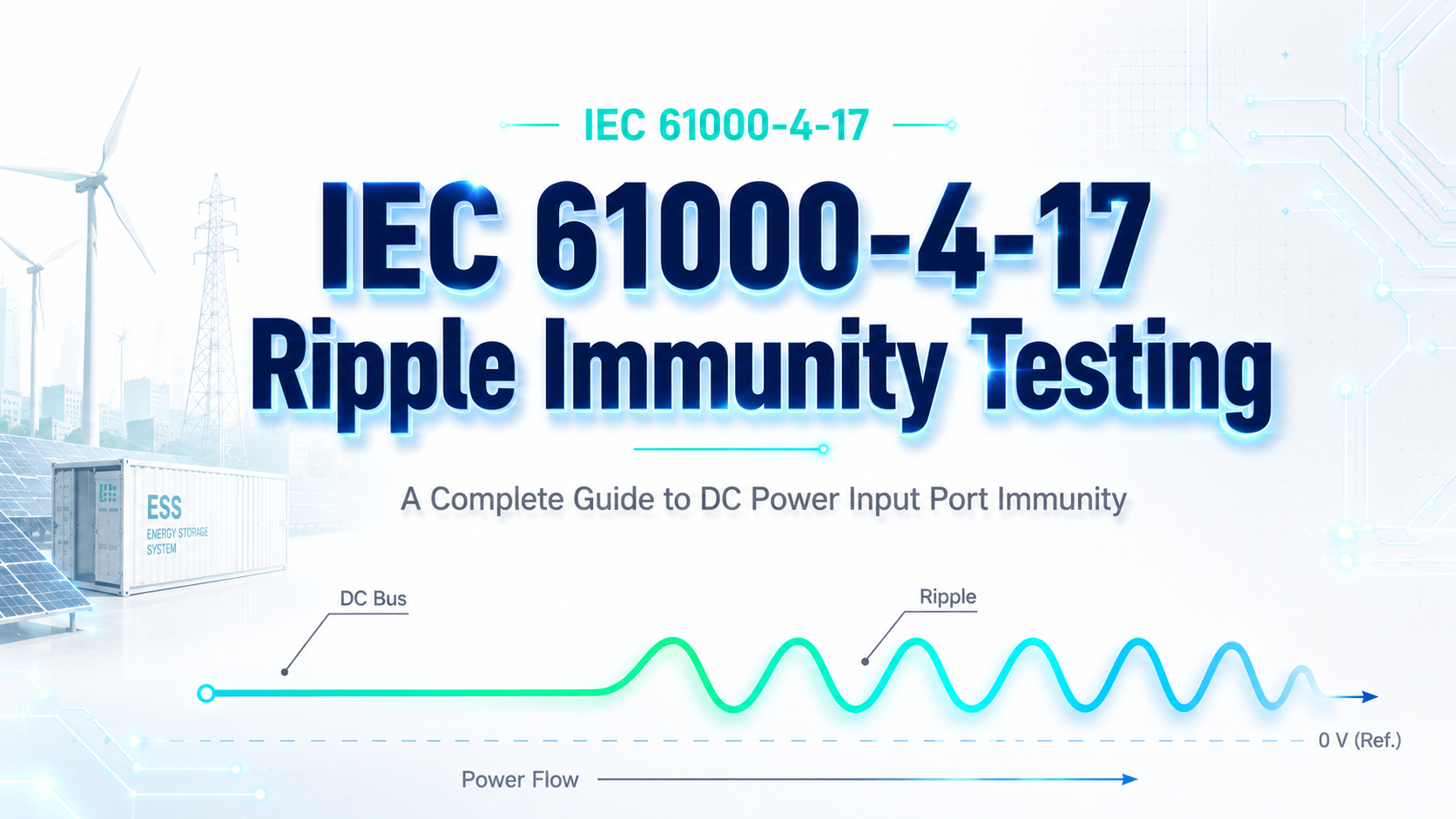
An ideal DC voltage should appear as a perfectly flat line. In real power systems, however, some level of alternating component is almost always present whenever the power passes through AC/DC rectification, DC/DC conversion, or a switched-mode power supply.
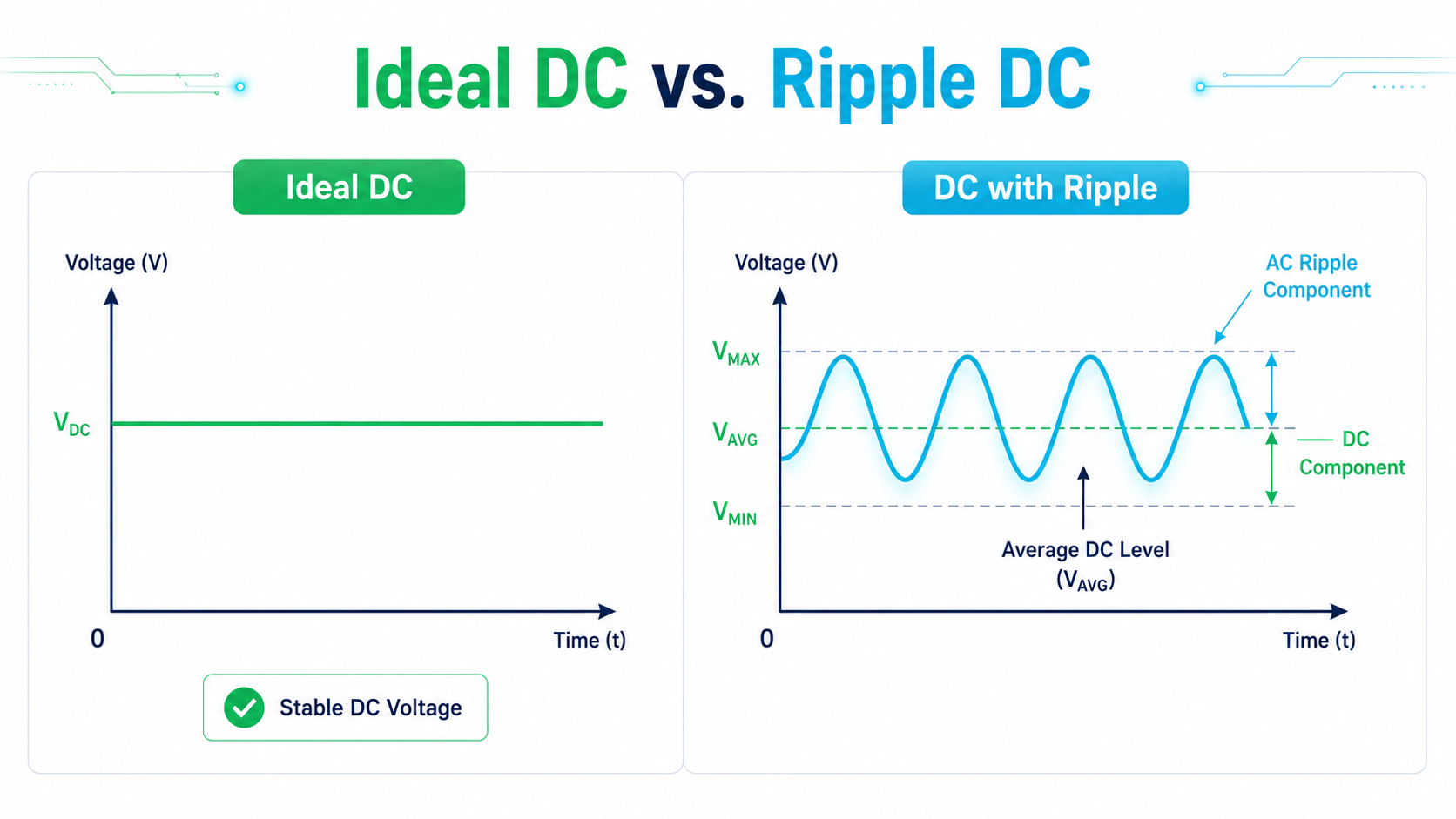
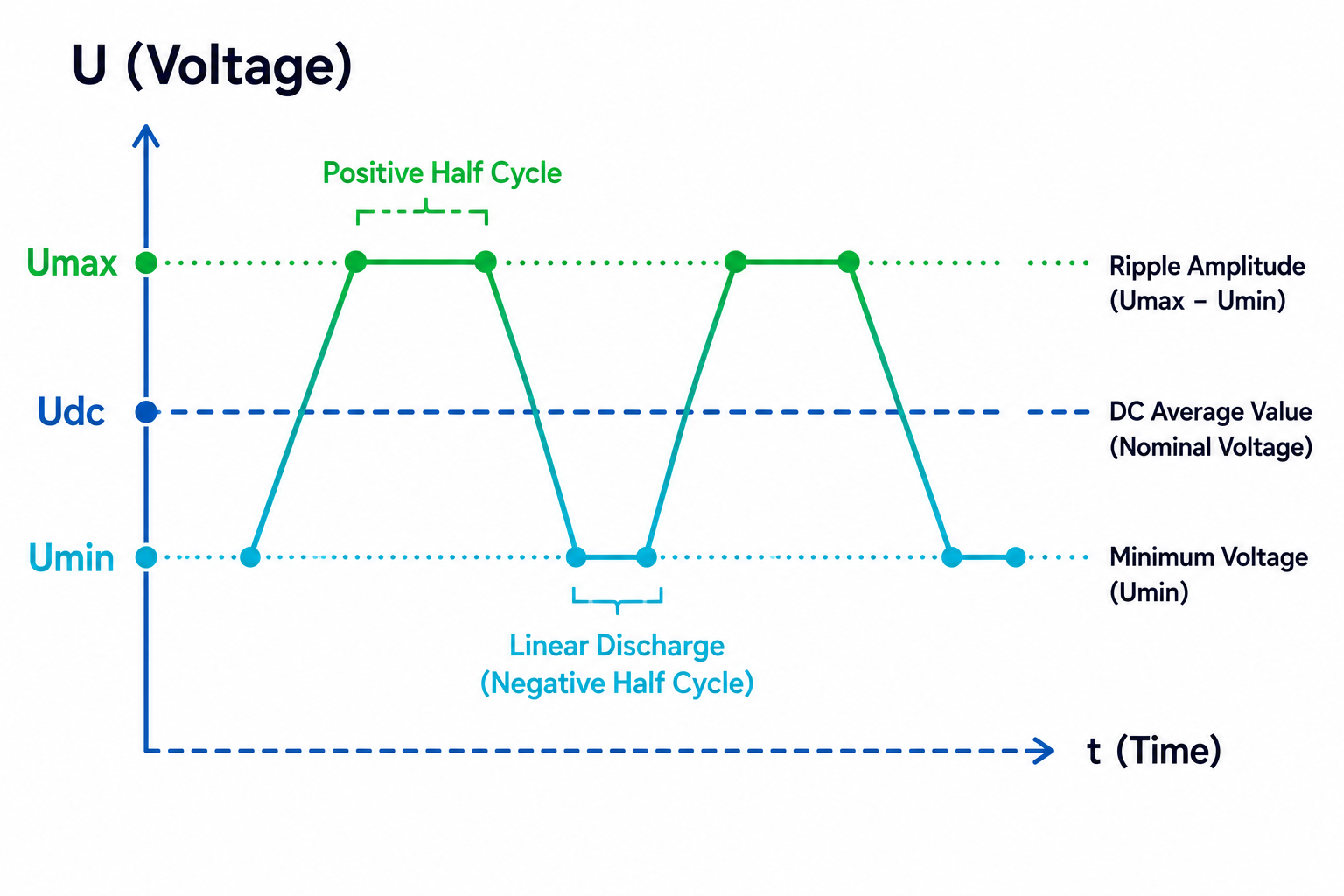
IEC 61000-4-17 defines ripple as an alternating component superimposed on a DC voltage. The purpose of the standard is not to measure how much ripple a power source produces, but to verify whether equipment can continue operating correctly when its DC input contains a specified level of ripple.
Ripple may originate from several sources. Rectifiers produce characteristic pulsating DC waveforms after converting AC power. Switched-mode power supplies generate high-frequency ripple through PWM switching. DC/DC converters can also leave residual voltage fluctuations at their switching frequency. In high-power systems such as AI servers, EV chargers, power conversion systems, UPS equipment, and battery energy storage systems, rapidly changing loads may also inject disturbances into a shared DC bus and affect other connected equipment.
How Ripple Affects Equipment Reliability
Ripple is not simply an undesirable waveform shape. It can directly affect system stability and long-term reliability.
When ripple enters a control or power circuit, it may increase ADC and sensor measurement errors, cause MCU resets, reduce PWM control accuracy, or interfere with industrial communication interfaces such as CAN, EtherCAT, and RS485. If the ripple frequency approaches the resonance frequency of an internal filter or control loop, the equipment may experience DC/DC converter oscillation, unstable output, incorrect fault detection, or unexpected protection trips.
Ripple current also creates additional thermal stress in capacitors, inductors, and power semiconductor devices. Over time, this can accelerate electrolytic capacitor aging, increase losses, and shorten product life. For AI infrastructure, electric vehicles, energy storage systems, and industrial equipment, ripple immunity is therefore not only an EMC compliance issue but also an important indicator of real-world reliability.
What Does IEC 61000-4-17 Test?
The core purpose of IEC 61000-4-17 is to evaluate whether equipment under test, or EUT, can continue operating correctly when an AC ripple component is present at its DC power input port.
During the test, a specified ripple voltage is superimposed on the rated DC supply voltage. This simulates the voltage fluctuations produced by rectifiers or other DC power systems under actual operating conditions. Engineers then monitor the EUT for abnormal behavior such as functional degradation, control errors, communication failures, resets, or shutdowns.
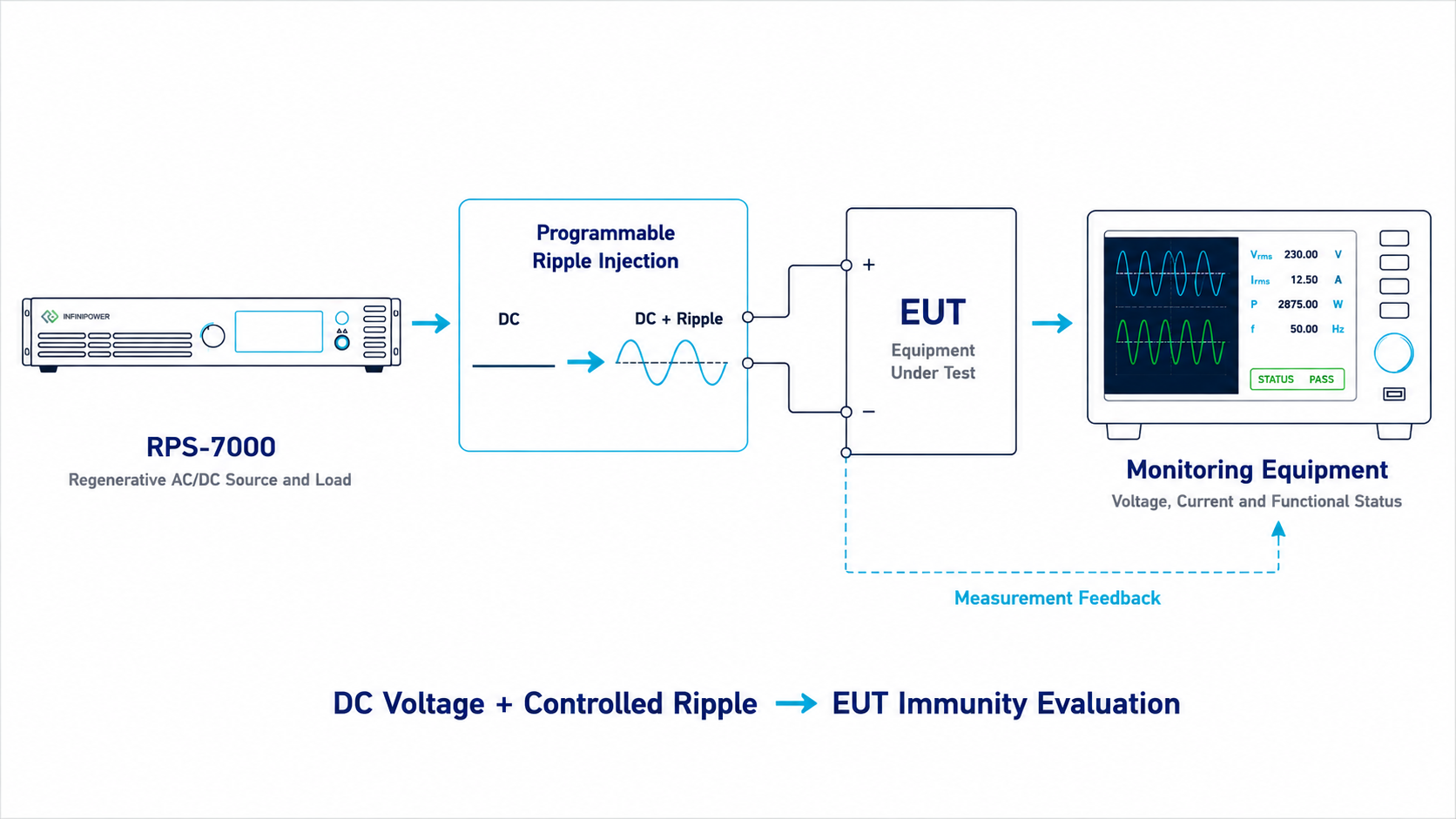
The standard is particularly relevant to low-voltage DC equipment powered by external rectifier systems or rechargeable battery systems. Typical applications include electric vehicles, energy storage systems, data centers, UPS equipment, power supplies, and industrial automation.
IEC 61000-4-17 Test Levels
IEC 61000-4-17 defines test severity according to ripple voltage expressed as a percentage of the rated DC voltage.
| Test Level | Ripple Amplitude |
|---|---|
| Level 1 | 2% |
| Level 2 | 5% |
| Level 3 | 10% |
| Level 4 | 15% |
| Level X | Defined by the relevant product standard |
For example, if the EUT has a rated input voltage of 360 Vdc, a Level 4 test requires a ripple voltage corresponding to 15% of the rated DC voltage. The actual test level should be selected according to the applicable product standard, installation environment, and expected operating risk rather than automatically applying the highest severity to every product.
What Is the Difference Between Single-Phase and Three-Phase Rectifier Ripple?
The ripple waveforms used in IEC 61000-4-17 are intended to represent actual rectifier output rather than an ideal sine wave added to a DC voltage. The standard provides representative single-phase and three-phase rectifier ripple waveforms.
Single-phase rectifier ripple typically has a larger voltage variation and a longer ripple period. It is commonly associated with single-phase AC/DC power supplies, smaller UPS systems, and battery chargers.
Three-phase rectifier ripple has a higher ripple frequency and a smoother voltage profile. It is more representative of industrial rectifiers, EV fast chargers, large power conversion systems, energy storage equipment, and AI data center power architectures.
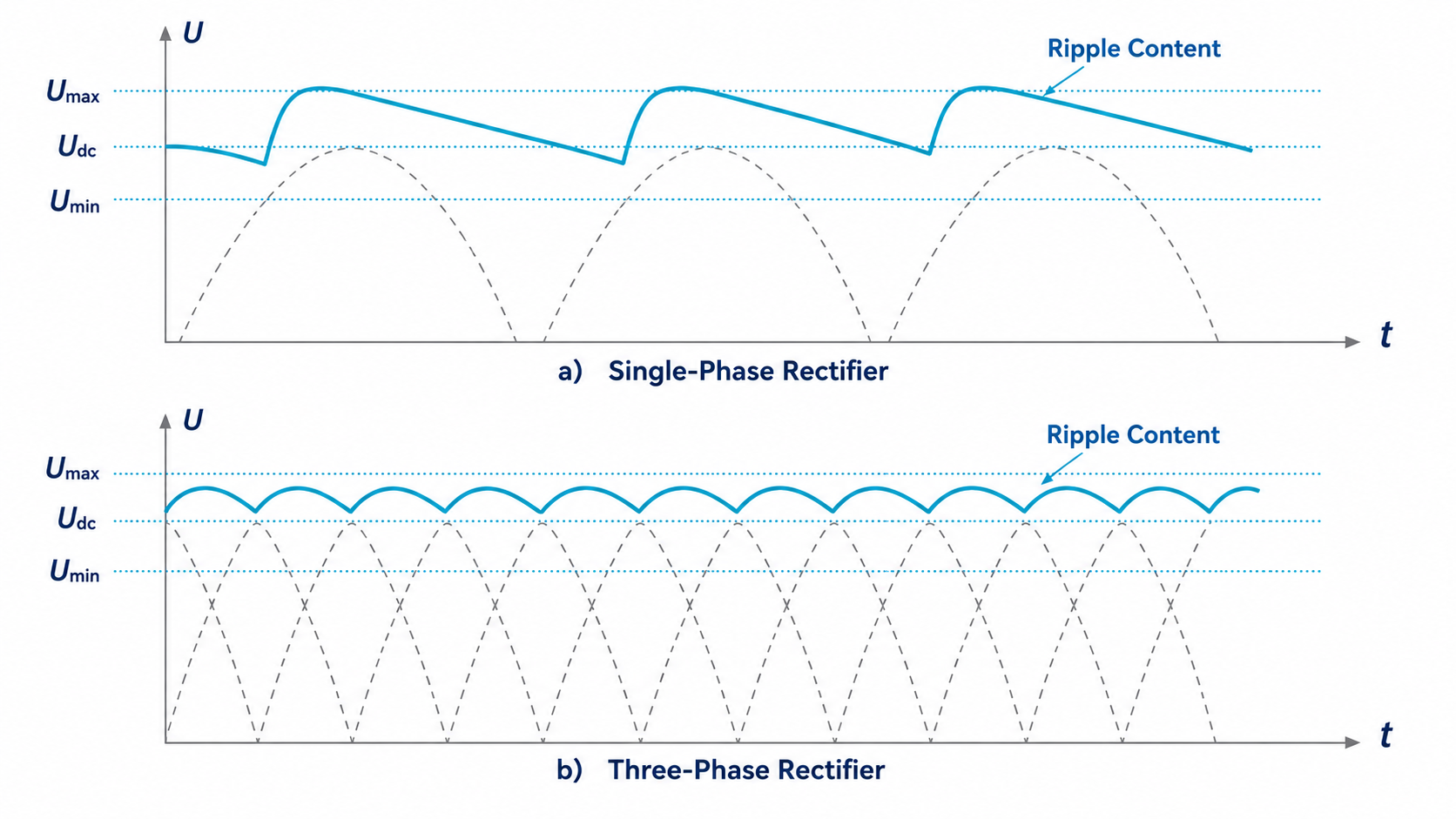 Comparison of DC ripple frequency and amplitude produced by single-phase and three-phase rectifiers.
Why Is Ripple Immunity Testing More Difficult Than It Appears?
At first glance, the test may seem as simple as adding an AC component to a DC voltage. In practice, accurate IEC 61000-4-17 testing places demanding requirements on the test source.
The source must maintain a stable DC output while generating the specified ripple amplitude and frequency without allowing load changes to distort the waveform. It also needs low output impedance and fast dynamic response so that the ripple measured at the EUT input remains consistent with the test requirement.
The challenge becomes greater when the EUT supports bidirectional power flow. Devices such as bidirectional DC/DC converters, power conversion systems, and motor drives may return energy to the source. Without four-quadrant operation or sink capability, this reverse energy can raise the DC voltage, clip the ripple waveform, or trigger source protection, making the test result unreliable.
INFINIPOWER RPS Series: A Comprehensive IEC 61000-4-17 Test Platform
To address increasingly complex DC power testing requirements, the INFINIPOWER RPS Series integrates AC/DC power source, electronic load, and grid simulation functions in a single platform. It enables engineers to build a precise and repeatable test environment for IEC 61000-4-17 ripple immunity verification.
With high-speed digital control and four-quadrant power architecture, the RPS Series can reproduce a wide range of DC power disturbances, including ripple, voltage variation, voltage dips, and interruptions. It can also absorb reverse energy from the EUT, helping maintain waveform accuracy and test repeatability during bidirectional applications.
When paired with PowerVUE control software, engineers can configure test sequences through a graphical interface, set voltage and timing parameters, monitor EUT behavior, and record test results more efficiently. This reduces the complexity of EMC verification and helps shorten both R&D and compliance workflows.
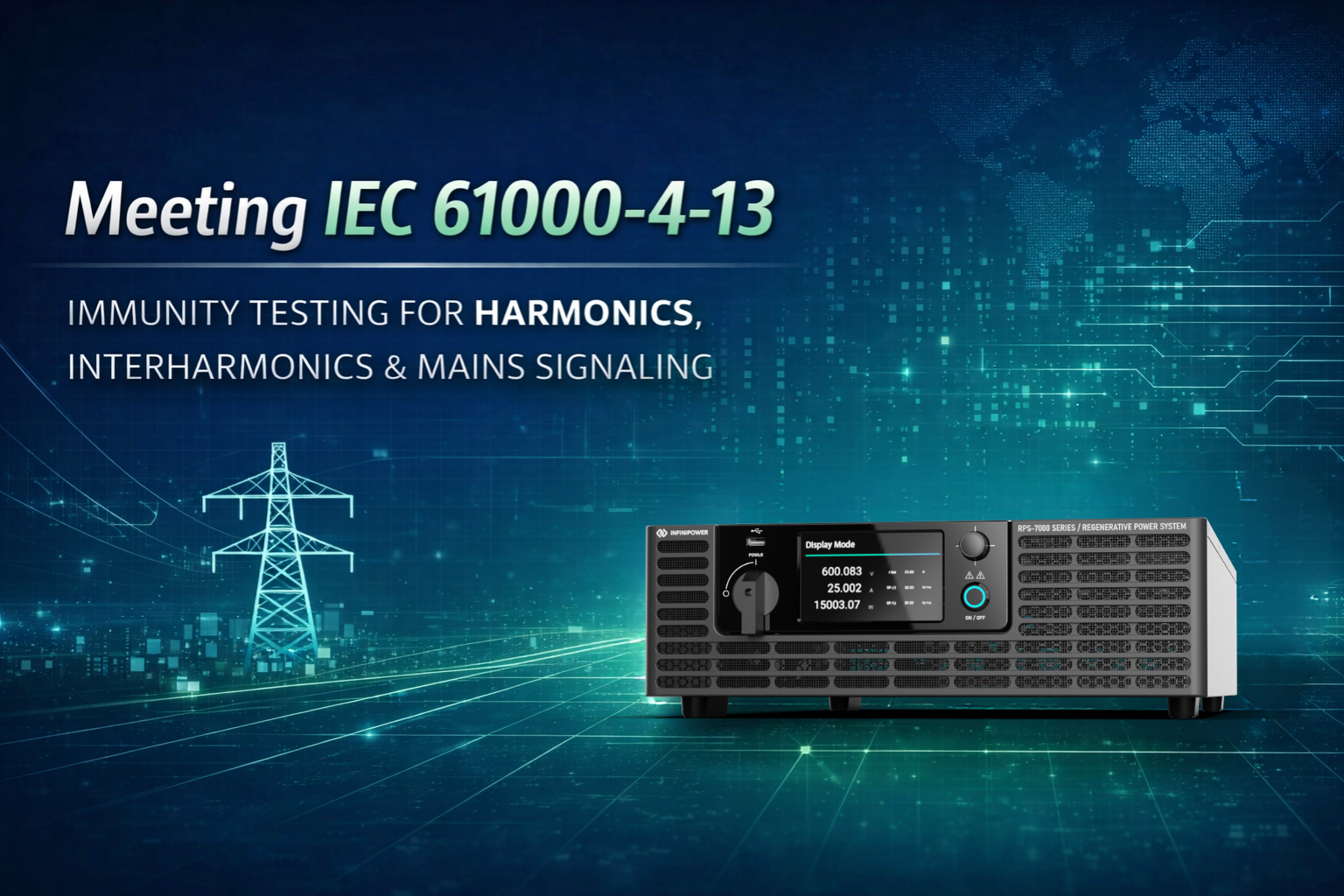
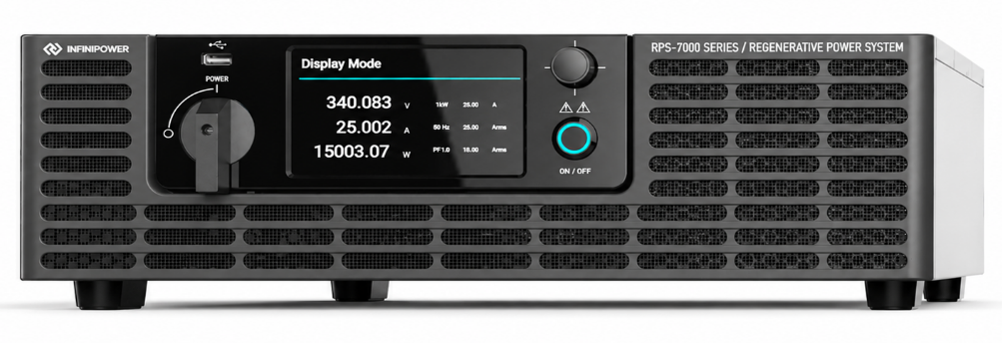
For applications requiring higher power density and greater system scalability, the RPS-7000 Series provides a regenerative AC/DC power source, electronic load, and grid simulator in one platform. It is designed for high-power testing in AI data centers, electric vehicles, energy storage systems, and advanced power electronics.
Learn more about the RPS-7000 Series
Conclusion
As high-power DC systems continue to expand across AI infrastructure, electric vehicles, energy storage, and industrial applications, engineers must evaluate more than whether a DC supply reaches its nominal voltage. They must also determine whether ripple within the supply could affect control performance, communication stability, component life, and overall system reliability.
IEC 61000-4-17 provides a repeatable method for verifying immunity to ripple at DC power input ports. It allows engineers to reproduce realistic rectifier-related disturbances during product development and identify potential risks before equipment is deployed in the field.
Ripple immunity is therefore more than a regulatory requirement. It is a fundamental part of product reliability, service life, and market competitiveness. With the high-precision power simulation capabilities of the INFINIPOWER RPS Series and the automated workflow provided by PowerVUE, engineers can perform IEC 61000-4-17 testing more efficiently and establish a robust power validation platform aligned with international standards.