Author name: Angela

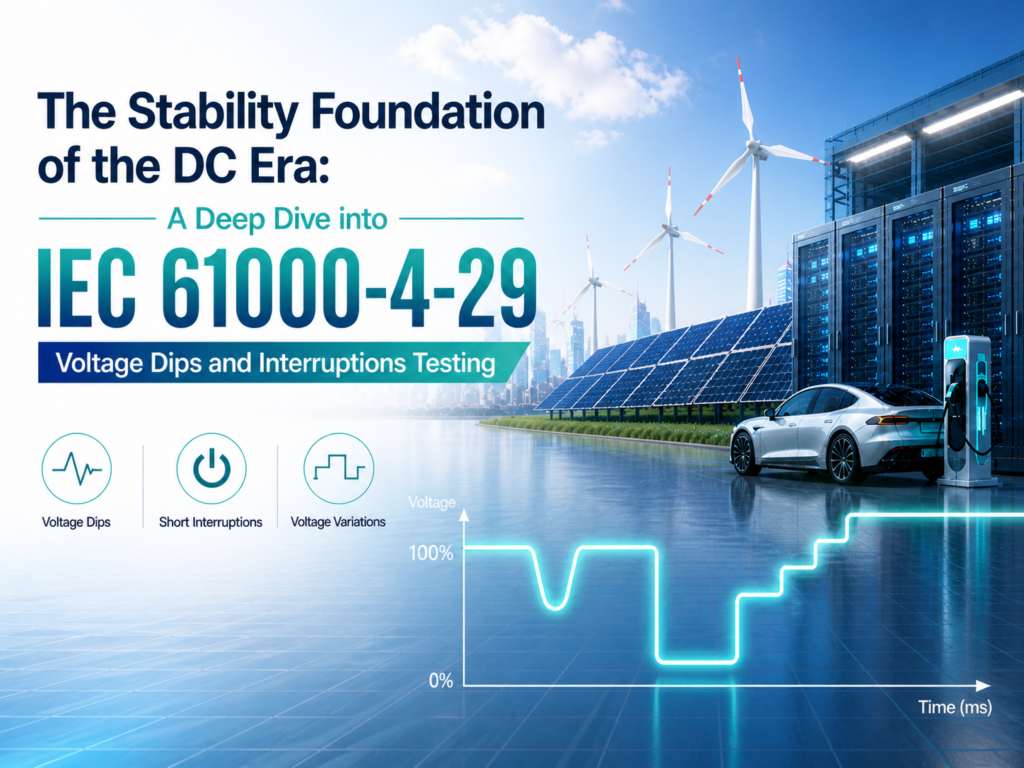
The Stability Foundation of the DC Era: A Deep Dive into IEC 61000-4-29 Voltage Dips and Interruptions Testing

As high-voltage DC systems are increasingly adopted in electric vehicles and data centers, voltage stability has become a critical design challenge.This article provides an in-depth analysis of how IEC 61000-4-29 defines voltage dips and interruptions, exploring both the underlying physical phenomena and testing methodologies to help engineers validate system stability and reliability in real-world applications.

The Stability Foundation of the DC Era: A Deep Dive into IEC 61000-4-29 Voltage Dips and Interruptions Testing Read More »

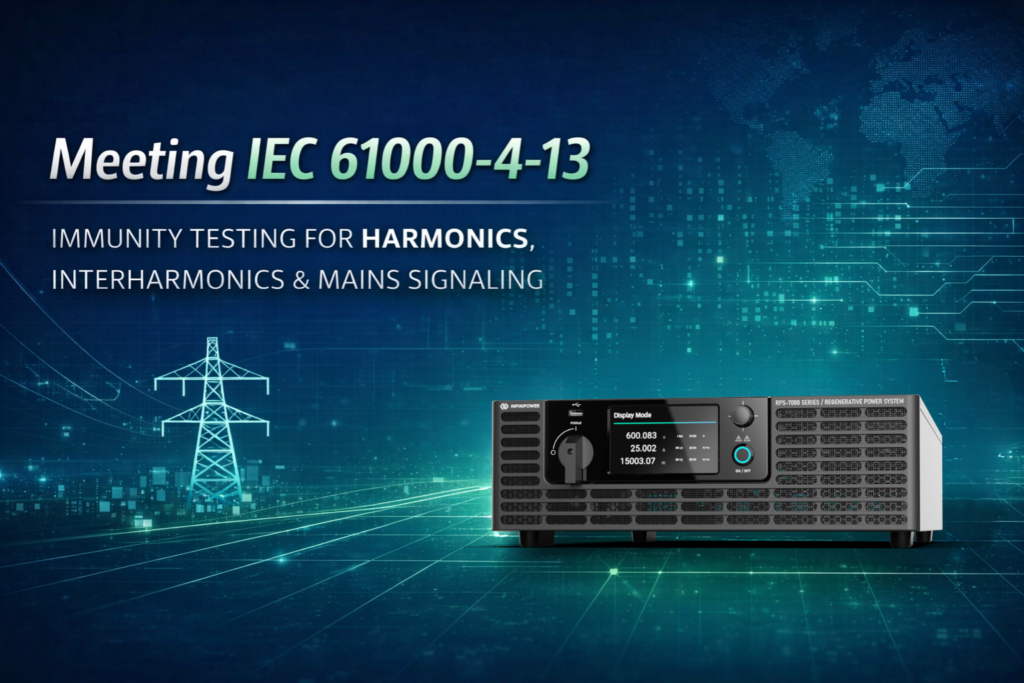
Meeting IEC 61000-4-13: Deep Dive into Immunity Testing for Harmonics, Interharmonics, and Mains Signaling

Master IEC 61000-4-13 immunity testing for harmonics, interharmonics, and mains signaling. Learn how waveform distortions like Flat Curve and Over Swing affect product stability. Discover how the INFINIPOWER RPS-5000 simulator uses SiC technology and four-quadrant simulation to ensure full compliance and robust power system design.

Meeting IEC 61000-4-13: Deep Dive into Immunity Testing for Harmonics, Interharmonics, and Mains Signaling Read More »

Sine Wave vs. Square Wave: Why Output Waveform Defines the Credibility of Grid Simulation and Testing

This article explores the critical differences between sine wave and square wave outputs, and explains why waveform quality directly determines the credibility of grid simulation and test results. From early-stage engineering and debugging to regulatory compliance and real-world grid validation, learn how choosing the right waveform ensures accurate, trustworthy testing — and why sine-wave-based grid simulation is essential for modern applications such as AI servers, data centers, EV charging, and energy storage systems.

Sine Wave vs. Square Wave: Why Output Waveform Defines the Credibility of Grid Simulation and Testing Read More »

Scroll to Top